by Eduardo Lopez Prado | Aug 23, 2026 | Home health Blog, Miami-Dade Home Health Care
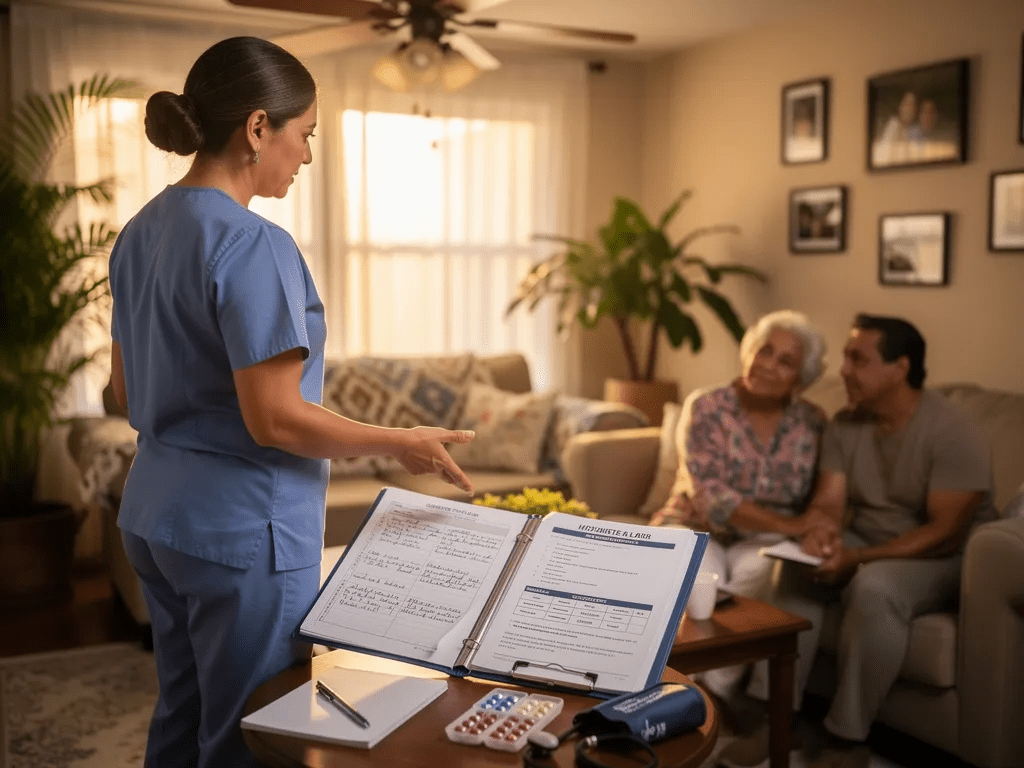
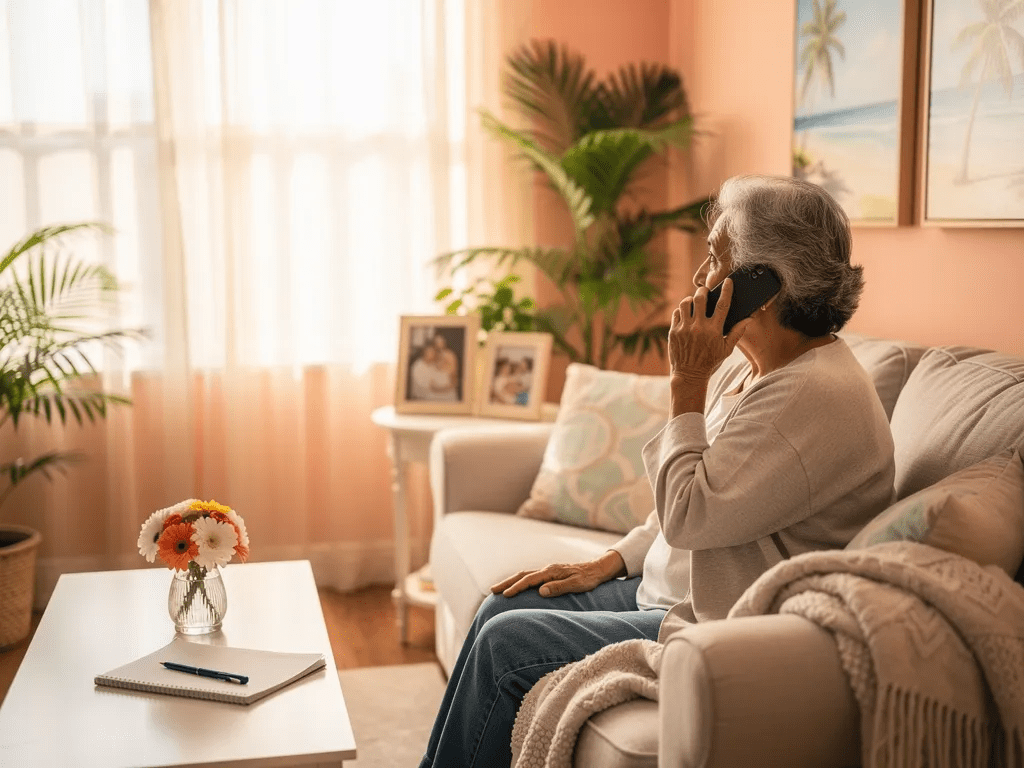
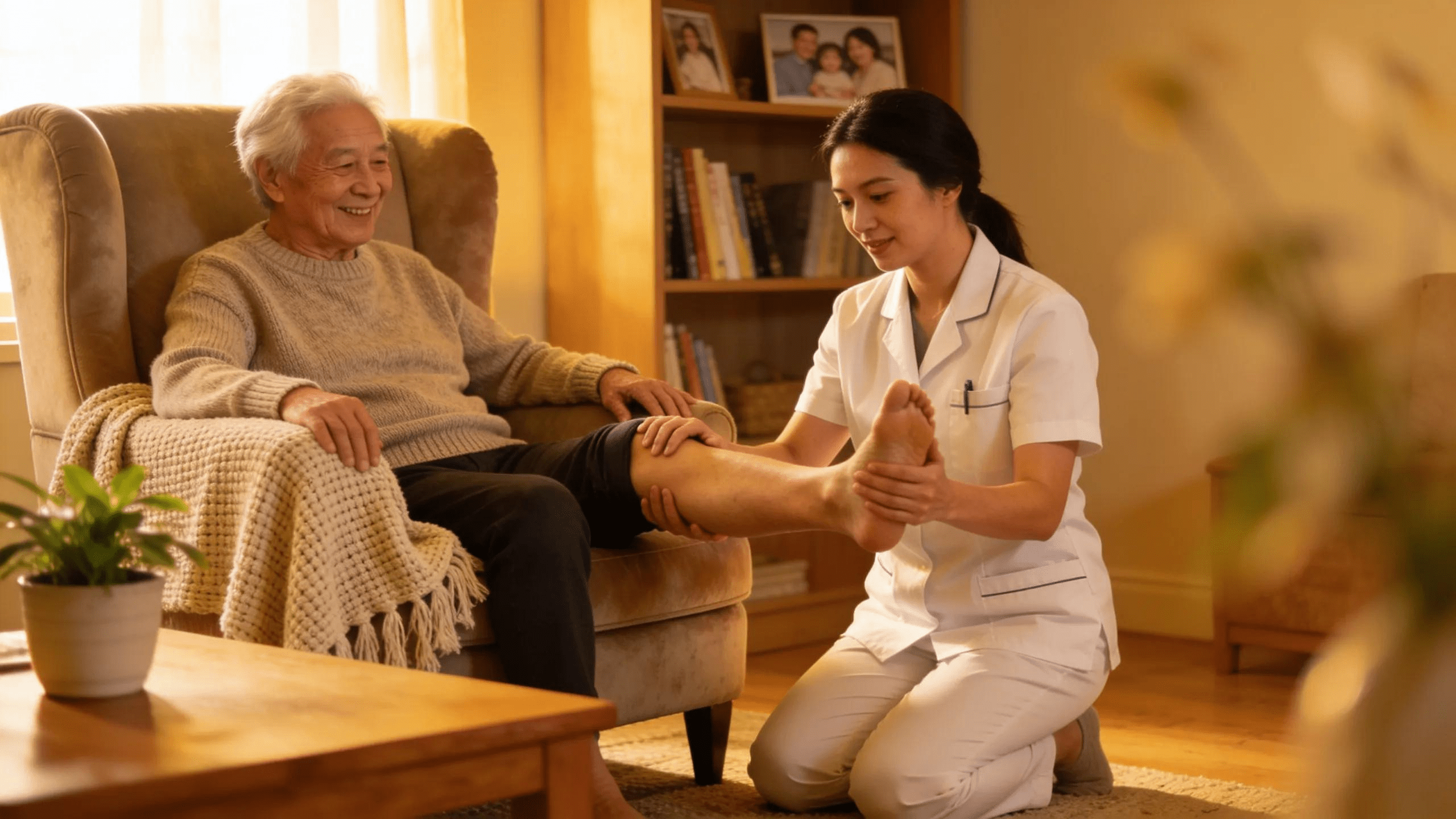
Elegir una agencia de salud en el hogar es una de las decisiones más importantes que puede tomar una familia cuando un ser querido necesita apoyo en casa. En Miami-Dade, las familias suelen enfrentarse a una amplia variedad de agencias, modelos de precios y tipos de atención, lo que puede hacer que el proceso se sienta abrumador. La agencia adecuada debe ofrecer profesionalismo, comunicación clara, atención personalizada y supervisión constante, no solo una lista de servicios en un folleto.
Ya sea que su ser querido necesite ayuda para bañarse, preparar comidas, recordar la medicación, apoyo para la movilidad o recuperación después de una hospitalización, la agencia que elijan puede influir profundamente en su comodidad, seguridad y tranquilidad. Esta guía explica qué buscar, qué preguntas hacer y cómo comparar agencias de manera que proteja la salud y la calidad de vida de su ser querido.
Por qué elegir la agencia correcta importa
La atención médica en el hogar funciona mejor cuando está adaptada a la persona. Una buena agencia debe ajustar los servicios a los objetivos de salud, las limitaciones y la rutina diaria del paciente. En una ciudad como Miami-Dade, donde las familias pueden depender tanto del cuidado formal como del apoyo informal, las agencias deben prestar especial atención a la comunicación, las preferencias culturales y la evolución de las necesidades de cuidado con el tiempo.
Cuando se elige la agencia equivocada, los pacientes pueden enfrentar atención inconsistente, mala comunicación, visitas retrasadas o un plan de cuidado que no se ajusta a sus necesidades médicas. Estos problemas suelen generar frustración tanto para el paciente como para la familia. La agencia correcta reduce este riesgo al ofrecer un plan de cuidado claro, personal capacitado responsable y un proceso organizado para actualizaciones y coordinación.
Verifique la licencia, las credenciales y la experiencia
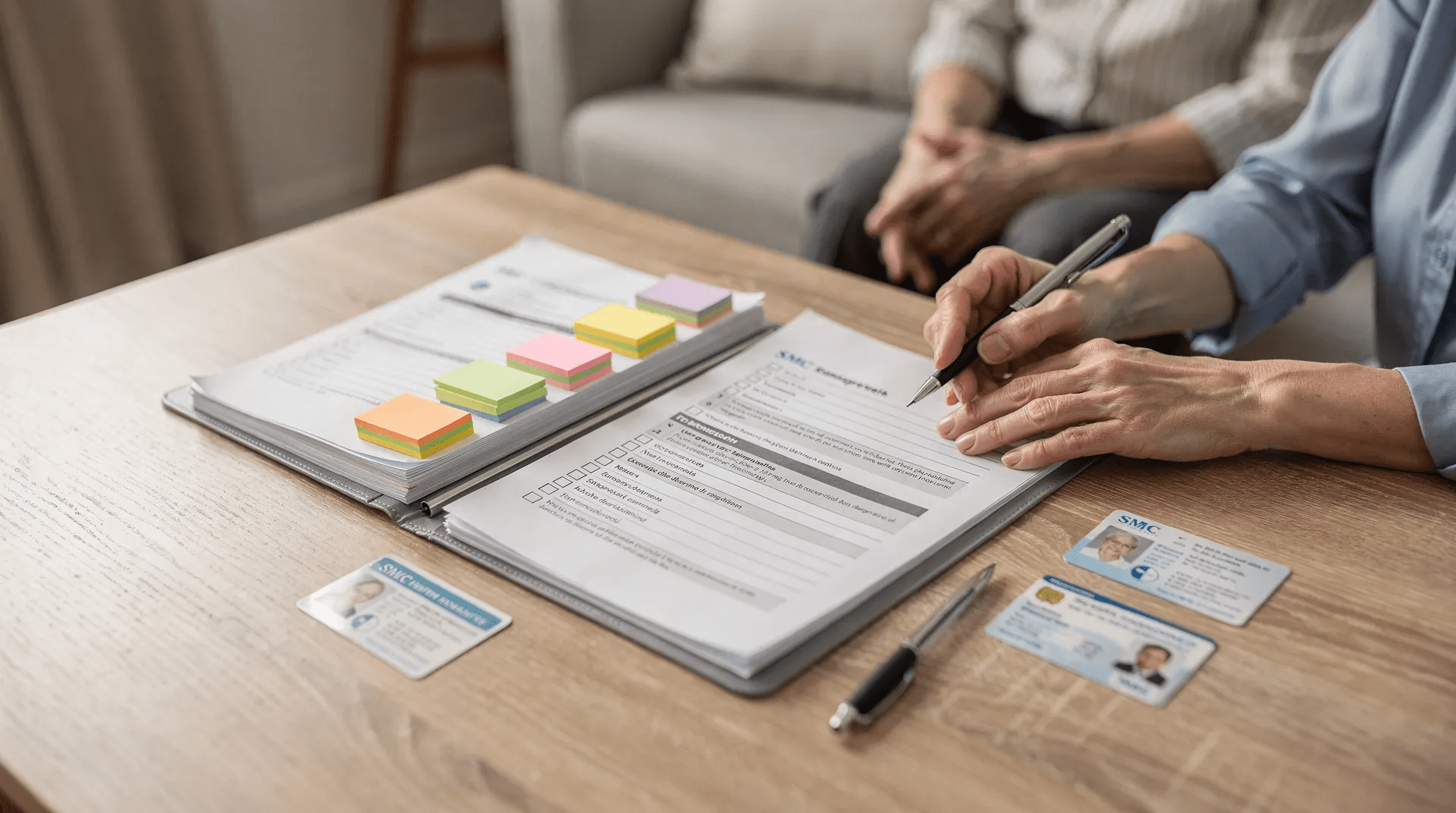
Una de las primeras cosas que debe verificar es si la agencia está debidamente licenciada y en regla. En Florida, las agencias de salud en el hogar están reguladas y deben poder proporcionar documentación sobre licencia, cumplimiento y alcance de los servicios que ofrecen.
Pregunte si la agencia contrata cuidadores, enfermeras, terapeuta o auxiliares capacitados con experiencia trabajando con personas mayores, pacientes postoperatorios o personas con enfermedades crónicas. Las agencias competentes serán transparentes sobre las calificaciones del personal y explicarán cómo emparejan a los cuidadores con cada cliente.
Asegúrese de que los servicios coincidan con las necesidades de su ser querido
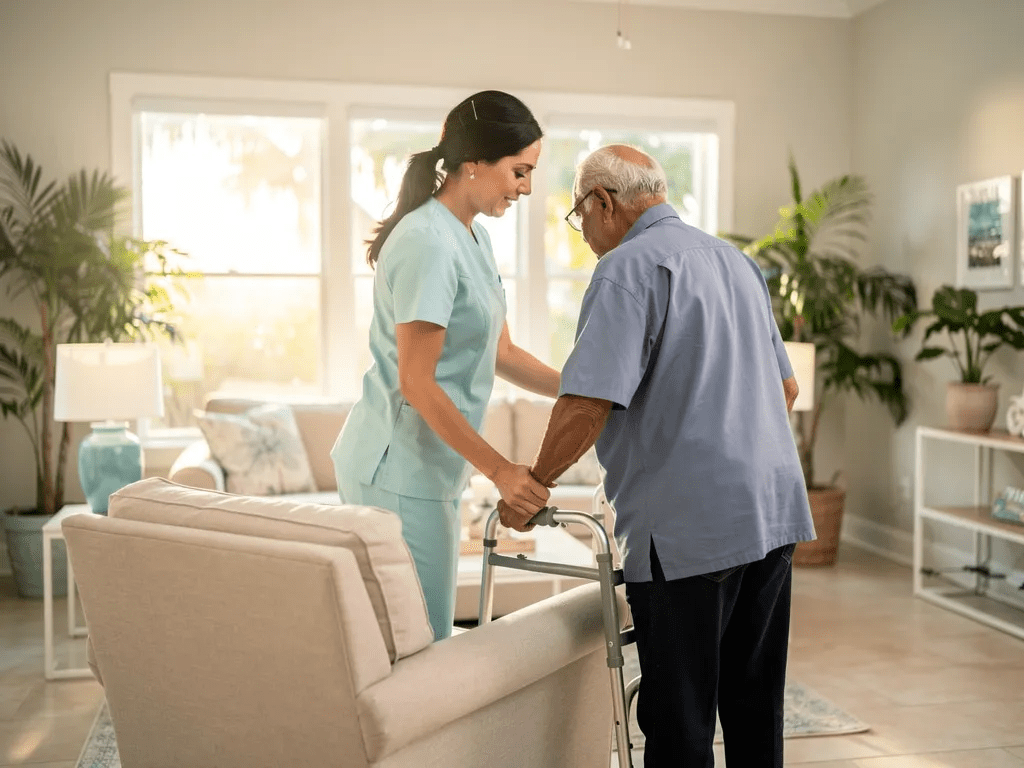
No todas las agencias ofrecen el mismo nivel de cuidado. Algunas se enfocan en atención de compañía, mientras que otras brindan enfermería especializada, terapia, recordatorios de medicación, apoyo para heridas o recuperación después del alta hospitalaria. Antes de elegir un proveedor, haga una lista de las necesidades específicas que está tratando de cubrir ahora y de las que podrían surgir en el futuro.
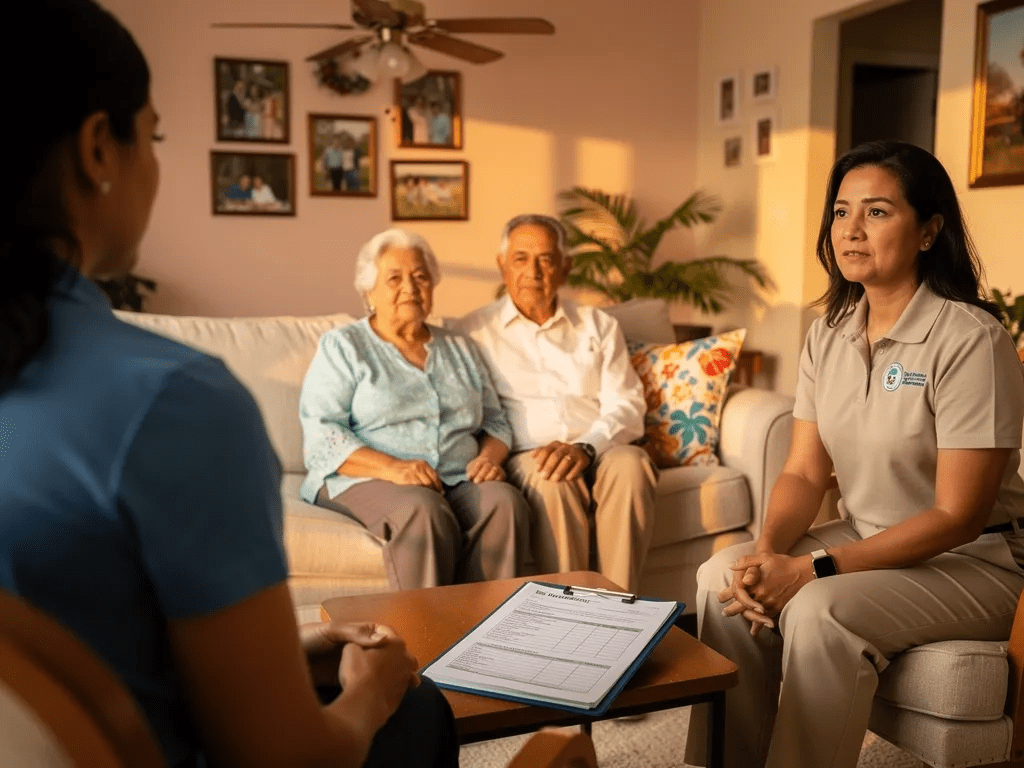
Una agencia sólida debe ayudar a crear un plan de cuidado personalizado en lugar de usar un enfoque único para todos. Esto incluye evaluar con qué frecuencia se necesita la atención, qué tareas el paciente puede o no puede hacer de forma independiente y si los familiares necesitan apoyo o educación como parte del proceso.
Preguntas para hacer antes de inscribirse
Hacer las preguntas correctas le ayudará a comparar agencias con confianza. Aquí hay varias preguntas importantes para hacer durante el proceso de selección:
- ¿Qué servicios específicos ofrecen para personas mayores y pacientes frágiles desde el punto de vista médico?
- ¿Sus cuidadores están licenciados, asegurados y capacitados para el nivel de cuidado necesario?
- ¿Cómo emparejan a los cuidadores con los pacientes y podemos conocer al cuidador antes de que comiencen los servicios?
- ¿Cuál es su proceso para manejar medicación, apoyo para la movilidad o tareas de cuidado personal?
- ¿Con qué frecuencia revisan y actualizan el plan de atención según cambian las necesidades?
- ¿Qué sucede si un cuidador llega tarde, no está disponible o no es una buena coincidencia?
- ¿Proporcionan comunicación por escrito y actualizaciones regulares para los familiares?
Las buenas agencias responden preguntas con calma y ofrecen respuestas claras. Si una agencia parece vaga, apresurada o demasiado enfocada en vender, esa es una señal de advertencia.
Señales de alerta a tener en cuenta
Algunas agencias pueden verse bien presentadas pero seguir siendo una mala opción para el cuidado en el hogar. Tenga cuidado si una agencia:
- no puede explicar claramente quién brindará la atención y cuándo
- ofrece un plan de cuidado sin evaluar al paciente en persona
- no proporciona referencias ni transparencia sobre el personal
- presiona a las familias para firmar rápidamente o comprometerse sin un periodo de prueba
- tiene mala comunicación o tiempos de respuesta lentos durante el proceso de admisión
- no documenta cambios en la condición, metas o necesidades de cuidado
Las familias deben sentirse informadas, no presionadas. Una agencia respetable debe hacer que el proceso sea colaborativo y respetuoso con la independencia y la dignidad de su ser querido.
Qué debe incluir un plan de cuidado sólido
Un plan de salud en el hogar bien diseñado debe ir más allá de completar tareas básicas. Debe incluir una descripción clara de las necesidades del paciente, resultados esperados, responsabilidades del cuidador y un horario que refleje rutinas realistas. También debe explicar qué pueden esperar los familiares y qué apoyo habrá si cambian las metas.
Los planes sólidos también incluyen revisión periódica. La recuperación, el envejecimiento y las condiciones crónicas pueden cambiar con rapidez. Una buena agencia reevalúa el cuidado con el tiempo y realiza ajustes según sea necesario para proteger la salud y prevenir hospitalizaciones innecesarias o agotamiento del cuidador.
La comunicación es parte del cuidado de calidad
Una familia debe saber cómo comunicarse con la agencia, a quién llamar con preguntas y cómo se comparten las actualizaciones. La comunicación transparente es especialmente importante cuando se brinda cuidado a una persona mayor con problemas de memoria, movilidad o necesidades médicas complejas.
Las mejores agencias mantienen informados a los familiares sin crear confusión. Documentan cambios, responden preguntas con rapidez y coordinan con médicos o terapeutas cuando eso forma parte del plan de cuidado del paciente.
Cómo comparar agencias en Miami-Dade
Al comparar agencias, mire más allá de un simple presupuesto. Pregunte por la experiencia de la agencia en su situación de cuidado específica, su tasa de retención de cuidadores y cómo abordan la continuidad del cuidado. Un precio más bajo no siempre es mejor si la agencia carece de experiencia, comunicación o un equipo de cuidadores estable.
También es útil comparar:
- el rango de servicios ofrecidos
- el nivel de experiencia del personal
- la capacidad de respuesta a las preguntas familiares
- la personalización del plan de atención
- la disponibilidad de enfermería especializada o terapia cuando sea necesario
- si la agencia trabaja bien con médicos y planificadores de alta
Las familias suelen tomar mejores decisiones cuando comparan agencias lado a lado y hacen las mismas preguntas en varios proveedores. Esto ayuda a evitar una decisión acelerada motivada por la urgencia en lugar de la calidad real.
Conclusión
Elegir la agencia correcta de salud en el hogar no se trata solo de conveniencia, sino de encontrar un aliado de confianza que entienda las necesidades de su ser querido y respete su dignidad. En Miami-Dade, las familias merecen agencias que brinden servicio receptivo, competencia clínica y atención personalizada que se adapte con el tiempo.
Tómese el tiempo para comparar agencias, haga preguntas directas y revise el plan de cuidado con atención antes de decidir. La pareja adecuada puede brindar tranquilidad, rutinas diarias más seguras y mejores resultados a largo plazo para la persona que recibe atención.
Preguntas frecuentes
¿Qué debo buscar en una agencia de salud en el hogar?
Busque licencia, cualificaciones del personal, precios transparentes, planes de atención claros y un proceso sólido de comunicación. Una buena agencia debe explicar exactamente qué ofrece y cómo empareja a los cuidadores con cada paciente.
¿Necesito una referencia para elegir servicios de salud en el hogar?
No necesariamente. Las familias pueden contactar directamente a las agencias y pedir una evaluación en el hogar. En algunos casos, los planificadores de alta hospitalaria o los médicos pueden recomendar un proveedor, pero no es obligatorio usar una referencia para comenzar el proceso.
¿Cómo sé si una agencia es confiable?
Las agencias confiables son transparentes sobre credenciales, responden preguntas con claridad y ofrecen un plan de atención por escrito. También deben contar con un proceso para supervisión del personal y comunicación con la familia.
¿Se puede ajustar el cuidado de la agencia según cambien las necesidades?
Sí. Una buena agencia debe revisar el plan de cuidado con regularidad y actualizarlo según cambien las necesidades del paciente. Esto es especialmente importante para las personas mayores que experimentan cambios en la movilidad, la cognición o la recuperación después de una enfermedad o cirugía.
Referencias
by Eduardo Lopez Prado | Aug 23, 2026 | Home health Blog, Miami-Dade Home Health Care
Choosing a home health agency is one of the most important decisions a family can make when a loved one needs support at home. In Miami-Dade, families often face a wide range of agencies, pricing models, and care types, which can make the process overwhelming. The right agency should offer professionalism, clear communication, personalized care, and consistent oversight — not just a list of services on a brochure.
Whether your loved one needs help with bathing, meal preparation, medication reminders, mobility support, or recovery after a hospital stay, the agency you choose can profoundly affect comfort, safety, and peace of mind. This guide explains what to look for, what questions to ask, and how to compare agencies in a way that protects your loved one’s health and quality of life.
Why choosing the right agency matters
Home health care works best when it is tailored to the individual. A good agency should match services to the patient’s health goals, limitations, and daily routines. In a city like Miami-Dade, where families may rely on both formal care and informal family support, agencies need to be especially attentive to communication, cultural preferences, and changing care needs over time.
When the wrong agency is selected, patients may experience inconsistent care, poor communication, delayed visits, or a care plan that does not match their medical needs. These problems often lead to frustration for both the patient and family. The right agency reduces this risk by offering a clear care plan, accountable staff, and an organized process for updates and coordination.
Look for licensure, credentials, and experience
One of the first things to verify is whether the agency is properly licensed and in good standing. In Florida, home health agencies are regulated and should be able to provide documentation of licensing, compliance, and the scope of services they offer.
Ask whether the agency hires trained caregivers, nurses, therapists, or aides who have experience working with seniors, post-surgical patients, or people with chronic conditions. Skilled agencies will be transparent about staff qualifications and will explain how they match caregivers to each client.
Make sure services match your loved one’s needs
Not every agency offers the same level of care. Some focus on companion care, while others provide skilled nursing, therapy, medication reminders, wound support, or post-hospital discharge recovery. Before choosing a provider, list the specific needs you are trying to meet now — and the needs that may emerge in the future.
A strong agency should help create a personalized care plan rather than using a one-size-fits-all approach. This includes evaluating how often care is needed, what tasks the patient can or cannot do independently, and whether family members need support or education as part of the process.
Questions to ask before you sign up
Asking the right questions will help you compare agencies with confidence. Here are several important questions to ask during the screening process:
- What specific services do you provide for seniors and medically fragile patients?
- Are your caregivers licensed, insured, and trained for the level of care needed?
- How do you match caregivers to clients, and can we meet the caregiver before services begin?
- What is your process for managing medications, mobility support, or personal care tasks?
- How often do you evaluate the care plan and update it as needs change?
- What happens if a caregiver is late, unavailable, or not a good fit?
- Do you provide written communication and regular updates to family members?
Good agencies welcome questions and provide clear, direct answers. If an agency seems vague, rushed, or overly sales-focused, that is a warning sign.
Red flags to watch for
Some agencies may look polished but still be a poor fit for a home care situation. Be careful if an agency:
- cannot clearly explain who will provide care and when
- offers a care plan without assessing the patient in person
- does not provide references or transparency about staffing
- pressures families to sign quickly or commit without a trial period
- has poor communication or slow response times during the intake process
- does not document changes in condition, goals, or care needs
Families should feel informed, not rushed. A reputable agency should make the process collaborative and respectful of your loved one’s independence and dignity.
What a strong care plan should include
A well-designed home health plan should go beyond basic task completion. It should include a clear description of the patient’s needs, expected outcomes, caregiver responsibilities, and a schedule that reflects realistic routines. It should also explain what family members can expect and what support will be available if goals change.
Strong plans also include periodic review. Recovery, aging, and chronic conditions can change quickly. A good agency will reassess care over time, making adjustments as needed to protect health and prevent unnecessary hospitalizations or caregiver burnout.
Communication is part of quality care
A family should know how to reach the agency, who to call with questions, and how updates are shared. Transparent communication is especially important when care is being provided for a senior with memory issues, mobility problems, or complex medical needs.
The best agencies keep family members informed without creating confusion. They document changes, answer questions quickly, and coordinate with physicians or therapists when that is part of the patient’s care plan.
How to compare agencies in Miami-Dade
When comparing agencies, look beyond a simple price quote. Ask about the agency’s experience in your specific care situation, their caregiver retention rate, and how they approach continuity of care. A lower price is not always better if the agency lacks experience, communication, or a stable caregiver team.
It is also helpful to compare:
- the range of services offered
- the experience level of staff
- responsiveness to family questions
- care plan customization
- availability of skilled nursing or therapy when needed
- whether the agency works well with physicians and discharge planners
Families often make better decisions when they compare agencies side by side and ask the same questions across providers. This helps prevent a rushed decision driven by urgency instead of actual quality.
Final thoughts
Choosing the right home health agency is not just about convenience — it is about finding a trusted partner who understands your loved one’s needs and respects their dignity. In Miami-Dade, families deserve agencies that provide responsive service, clinical competency, and personalized care that adapts over time.
Take time to compare agencies, ask direct questions, and review the care plan carefully before making a decision. The right match can provide peace of mind, safer daily routines, and better long-term outcomes for the person receiving care.
Frequently asked questions
What should I look for in a home health agency?
Look for licensing, staff qualifications, transparent pricing, clear care plans, and a strong communication process. A good agency should explain exactly what they provide and how they match caregivers to each patient.
Do I need a referral to choose home care services?
Not necessarily. Families can often contact agencies directly and ask for a home assessment. In some cases, hospital discharge planners or physicians can recommend a provider, but you are not required to use a referral to begin the process.
How do I know if an agency is trustworthy?
Trustworthy agencies are transparent about credentials, answer questions clearly, and provide a written care plan. They should also have a process for staff supervision and family communication.
Can agency care be adjusted as needs change?
Yes. A strong agency should regularly review the care plan and update it as a patient’s needs change. This is especially important for seniors who experience changes in mobility, cognition, or recovery after illness or surgery.
References
by Eduardo Lopez Prado | Aug 23, 2026 | Caregiver support
Many families want to help an older loved one stay at home, but they are not always sure what in-home care can realistically provide. For seniors in Miami-Dade, staying at home often means comfort, familiarity, and a sense of control. It can also mean more independence, less disruption to daily routines, and greater peace of mind for everyone involved.
In-home care is not only for people who need medical attention around the clock. It can be a practical, compassionate solution for seniors who need help with everyday tasks, companionship, medication reminders, meal preparation, light housekeeping, mobility support, or simply someone dependable to check in on them regularly. According to trusted elder-care guidance from organizations such as AARP, the CDC, and the National Institute on Aging, a well-designed home-care plan can improve quality of life while helping older adults remain safely in their own homes for longer.
As loved ones grow older, families often begin noticing small changes that can affect safety, confidence, and quality of life. A routine that once felt easy may now feel exhausting. A senior may need extra help getting dressed, preparing meals, managing medications, or getting to appointments. In those moments, in-home care can provide support that preserves dignity while reducing stress for both the senior and the family.
Why staying at home matters so much
One of the biggest benefits of in-home care is that it allows seniors to remain in a familiar environment. Being at home can reduce confusion and anxiety, especially for older adults who are more comfortable in their own space. It helps preserve daily routines, favorite habits, and personal comfort.
Comfort and familiarity
For many seniors, the home is tied to memory, identity, and emotional well-being. It is where they feel most at ease. In-home care supports this comfort by creating a safer and more manageable environment without forcing a move to a facility. That can make a meaningful difference in mood, confidence, and overall sense of independence.
When a person is surrounded by familiar objects, routines, and relationships, they may feel more grounded and less stressed. This is especially important for older adults who are dealing with memory concerns or mobility challenges. A calmer environment can improve emotional wellness and make daily tasks feel less intimidating.
Support with daily life without losing independence
In-home care can assist with a wide range of needs, from basic household tasks to personal support. This may include preparing meals, helping with light cleaning, reminding a senior to take medication, assisting with bathing or grooming, or helping with mobility and transfers. It can also include transportation to appointments, social companionship, or simply spending time with a loved one to reduce isolation.
Practical help that preserves dignity
These services can help a senior stay more independent without placing the entire responsibility on one family member. That matters because many caregivers are juggling work, childcare, and their own health concerns. In-home care can provide structure and regular support while allowing family members to stay involved in a more balanced way.
When care is tailored to the individual, it can improve quality of life in very practical ways. A senior may feel more confident getting through the day, more comfortable in their home, and less dependent on others for every task. At the same time, family members can feel more at ease knowing their loved one is receiving dependable support.
Safety and peace of mind
Safety is another major reason families explore in-home care. Falls, reduced mobility, poor balance, medication mistakes, and difficulty preparing meals can create serious risks. Even when a senior is not in crisis, these challenges can gradually affect independence and increase stress for the whole family.
Reducing risks before they become emergencies
In-home caregivers can help monitor changes in walking, mobility, nutrition, hygiene, and routines. They can also provide reassurance when a senior is feeling overwhelmed or unsure about what to do next. This added supervision can prevent small problems from becoming bigger ones. It can also help family members sleep better at night knowing someone is checking in regularly and noticing changes early.
For seniors living alone, this kind of support can be especially valuable. A trained caregiver may notice if the person is skipping meals, struggling to manage medications, or becoming less active than usual. That kind of early awareness can lead to faster action, better communication, and a more proactive care plan.
According to guidance from the National Institute on Aging and the Family Caregiver Alliance, identifying emerging risks early can reduce caregiver burnout and help older adults maintain better health and stability at home. A proactive plan is often far less stressful than waiting for a crisis to happen.
Companionship matters as much as practical help
Many people think home care is only about physical assistance, but companionship is often just as important. Loneliness can affect sleep, appetite, motivation, and emotional health. Seniors who feel isolated may become withdrawn, depressed, or less interested in daily activities.
Emotional well-being and connection
In-home care offers social interaction, conversation, and meaningful connection. A caregiver can sit with a senior, accompany them on walks, help them enjoy hobbies, encourage them to stay active, or simply be a reassuring presence. These moments do more than fill time—they can improve emotional well-being and help a senior feel cared for and valued.
That personal connection matters, especially for older adults who may live alone or have limited family involvement. It can also help reduce caregiver guilt, because family members know their loved one is not simply being supervised but also being supported emotionally.
Respite for family caregivers
Family caregivers are often the unsung heroes of home care. They may be adult children, spouses, or other relatives who are doing their best to help while balancing jobs and personal responsibilities. Over time, this can lead to burnout, emotional exhaustion, and stress.
Support for the whole family
In-home care can provide meaningful respite. It gives family caregivers time to rest, run errands, take care of their own health, or simply be present without carrying every responsibility alone. That kind of support can improve the whole family dynamic and help the caregiving relationship remain healthier over time.
When a family feels supported instead of stretched thin, they can make better decisions and focus on what matters most: the well-being of their loved one. In-home care can act as a bridge between independence at home and the practical support needed to make that possible.
When in-home care may be the right next step
There is no single moment when in-home care becomes necessary, but there are common signs that it may be time to explore options. These can include trouble with daily routines, increased forgetfulness, missed medications, mobility concerns, frequent falls, isolation, or a family caregiver feeling overwhelmed.
Starting sooner rather than waiting for a crisis
Sometimes the need is gradual. A senior may become more dependent on family for transportation or meal planning. They may need help with bathing, dressing, or getting in and out of bed. It may also be as simple as wanting safer, more reliable support at home instead of managing everything alone.
In-home care is often most effective when it begins early. That allows families to plan ahead, build a support routine, and respond before a small problem becomes a bigger one. It also gives seniors time to become comfortable with a caregiver and adjust to a care plan that fits their preferences.
Choosing home care does not mean giving up independence. In many cases, it is the opposite. It means creating the structure and support needed so a senior can keep living at home in a way that feels safe, comfortable, and respectful.
Personalized care can make all the difference
Every senior has different needs, routines, and preferences. The right in-home care plan should be personalized, not one-size-fits-all. Some families need help with bathing, mobility, and medication reminders. Others may need companionship, meal preparation, transportation, or light home assistance. Some may need a few hours a week; others may need more consistent support.
Choosing a plan that fits real life
This flexibility is one of the reasons in-home care is so valuable. It can be built around the individual’s routine, goals, and comfort level. That kind of personalized approach often leads to better outcomes and a stronger sense of trust between the caregiver and the family.
For many Miami families, the goal is not simply to manage day-to-day tasks. It is to create a safe, supportive environment where a loved one can age with comfort, dignity, and connection. In-home care can help make that possible.
If your family is considering home care, it may help to start with a conversation about what support is needed, what routines matter most, and how care can make daily life easier. A thoughtful plan can bring peace of mind and help a senior stay at home with confidence.
Frequently asked questions
Is in-home care only for people who need medical care?
No. In-home care can support seniors who need help with daily living tasks, companionship, meal preparation, medication reminders, transportation, or light housekeeping. It is often used for non-medical support as well as recovery or transitional care.
Can in-home care help a loved one stay independent at home?
Yes. In-home care is often designed to preserve independence by helping with tasks that may be difficult or tiring. It allows seniors to remain in familiar surroundings while still receiving dependable support.
What if a family member is already helping most of the time?
That is a common reason to consider home care. A professional caregiver can provide respite, reduce caregiver stress, and create a more sustainable support system for the whole family.
How do families decide what type of care is needed?
The right answer depends on the senior’s needs, routines, safety concerns, and family goals. A good starting point is identifying the specific tasks that are becoming difficult and deciding where extra support could help most.
Sources and references
- AARP: information on caregiver support, aging in place, and family caregiving.
- CDC: elder safety, fall prevention, and healthy aging resources.
- National Institute on Aging: guidance on senior health, mobility, and home-based support.
- Family Caregiver Alliance: practical resources for family caregivers and long-term care planning.
- Medicare.gov and local home health resources for understanding services and coverage options.
At Ameri-Care, we understand that every family has different needs. We focus on compassionate, respectful support that helps older adults live safely and comfortably at home while giving families peace of mind.
by Eduardo Lopez Prado | Aug 5, 2026 | Home health Blog
CHF Home Care Miami: Managing Heart Failure at Home
By Ameri-Care Professional Service, Inc. Editorial Team · Updated 2026-08-05
Ameri-Care Professional Service, Inc., based in Miami Lakes, FL with a Miami Lakes-based care team, provides in-home care for congestive heart failure through skilled monitoring of symptoms, medication management, dietary sodium control, and vital sign tracking, reducing hospital readmissions and supporting patients' cardiac health within familiar home surroundings daily.
Congestive heart failure management at home combines skilled nursing, symptom monitoring, and therapy services tailored to cardiac patients. Ameri-Care Professional Service, Inc. delivers Medicare-covered home health care, including skilled nursing and physical therapy, helping CHF patients track weight, manage medications. Reduce hospital readmissions while maintaining independence and safety within their own homes.
- Heart failure affects up to 15 million people across extended Europe, requiring specialized integrated care approaches.
- Patients improve emotional well-being by building habits around eating better and tracking symptoms daily.
- Ameri-Care Professional Service, Inc. operates in Miami Lakes, FL with a Miami Lakes-based care team serving patients.
- Home health care reduces hospitalizations for older Americans managing heart disease as a daily effort.
Why Does Congestive Heart Failure Need Home Care?
Congestive heart failure demands professional home support because the condition ranks among the leading causes of hospitalization for older Americans. Left unmanaged, a weakened heart triggers repeat hospital visits, medication complications, and a steady decline in independence. Congestive heart failure home care closes that gap by bringing medical oversight directly into the household. Symptoms can be caught early rather than after an emergency room visit.
A failing heart cannot pump enough blood to meet the body's demands. That single mechanical problem explains why walking across a room or climbing a short flight of stairs suddenly feels exhausting for CHF patients. Fatigue, shortness of breath, and swelling become daily obstacles rather than occasional inconveniences.
Home-based support addresses these obstacles directly. Skilled home health services deliver essential medical. Personal assistance inside the patient's own home, avoiding the stress and exposure risks of repeated facility visits.
What does skilled nursing care add for CHF patients?
Heart failure nursing care brings professional medical attention into the home rather than requiring transport to a clinic. This arrangement benefits seniors and individuals managing chronic illness by allowing consistent monitoring without the physical strain of travel.
Home-based nursing support typically includes:
- Regular vital sign and weight checks to catch fluid buildup early
- Medication management to prevent dangerous interactions or missed doses
- Symptom education so families recognize warning signs before they escalate
- Coordination with physicians to adjust care plans as the condition changes
For families searching for chf home care miami options, this model of home-centered, skilled monitoring offers a practical path to fewer emergencies and greater day-to-day stability.
What Does Skilled Nursing Care Include?
Medical support delivered at home forms the core of skilled nursing care for seniors managing chronic conditions. For families in Doral, Hialeah, and surrounding Miami-Dade communities, CHF home care Miami services bring licensed nurses directly to a patient's living room, bedroom, or kitchen table. Ongoing health conditions, disabilities, and post-surgical recovery all fall under this umbrella of support.
Skilled nursing at home covers far more than routine check-ins. Services are built around each patient's specific medical needs, adjusting as those needs change over time. A typical care plan may include:
- Medication management and administration
- Wound care and dressing changes
- Vital sign monitoring, including blood pressure and heart rate
- Coordination with physicians on treatment adjustments
- Patient and caregiver education on symptom recognition
Home health services across the Miami area also extend beyond nursing alone. Therapy and personal care support work alongside nursing to serve seniors. Individuals with disabilities, creating a fuller circle of daily assistance.
How Does Home Health Support Someone With Congestive Heart Failure?
Congestive heart failure home care connects a patient's home nursing team directly with the prescribing physician. That coordination allows nurses to track symptoms like swelling, shortness of breath, and weight changes before they escalate. The goal stays simple: help patients remain at home while lowering the chance of a return trip to the hospital.
What Makes Heart Failure Nursing Care Different From General Home Nursing?
Heart failure nursing care focuses on disease-specific monitoring rather than general wellness checks. Nurses watch for early warning signs unique to cardiac decline, then report changes to the treating physician right away. This tighter feedback loop supports faster intervention and steadier symptom control at home.
How Does Therapy Aid CHF Recovery?
Skilled therapy speeds recovery for congestive heart failure patients by rebuilding strength, monitoring symptoms closely, and preventing the setbacks that send patients back to the hospital. Post-acute home health services address the transition from hospital discharge to daily life at home, a period research identifies as one of the most vulnerable stretches of the entire recovery process. Families navigating congestive heart failure home care often describe the days after discharge as overwhelming, filled with new medications, unfamiliar equipment, and lingering fatigue.
Structured heart failure nursing care turns that uncertainty into a manageable routine. Nurses track weight, blood pressure, and breathing patterns during scheduled visits, catching warning signs before they escalate into emergencies. Physical and occupational therapists rebuild the stamina needed for walking, climbing stairs, and completing daily tasks safely.
Research consistently points to measurable advantages when recovery happens at home under professional supervision rather than through repeated hospital stays alone. Outcome monitoring among heart failure patients receiving home-based care shows fewer readmissions and steadier gains in mobility and independence.
What does CHF therapy actually involve at home?
Therapy sessions combine cardiac-focused exercise, breathing techniques, and symptom education tailored to each patient's tolerance level. Sessions typically include:
- Guided walking or light resistance exercise to rebuild endurance
- Breathing retraining to ease shortness of breath during activity
- Daily task practice, such as dressing and bathing, to restore independence
- Symptom tracking so patients and families recognize warning signs early
How soon should therapy start after hospitalization?
Early engagement matters most during the first weeks after discharge, when relapse risk runs highest. Families seeking CHF home care in Miami benefit from coordinating therapy visits immediately following hospital release, before setbacks take hold. Prompt, consistent care during this window supports lasting improvement rather than repeated cycles of hospitalization.
What Daily Habits Prevent CHF Readmission?
Consistent daily routines reduce hospital returns for congestive heart failure patients far more than occasional check-ins. Seniors who build steady habits around eating, symptom tracking, and doctor-approved exercise report greater improvement and stronger emotional well-being. Skipping these routines raises the odds of a crisis landing a loved one back in the emergency room.
Three habits stand out as the foundation of stable heart failure management at home:
- Eating better — consistent, heart-conscious meals limit fluid retention and blood pressure swings.
- Tracking and managing symptoms — daily weight checks and symptom logs catch warning signs early.
- Exercising as directed — movement approved by the care team preserves strength without overtaxing the heart.
Follow-up care matters just as much as these daily habits. Monitoring symptoms alongside regular provider visits keeps small changes from becoming emergencies. Families searching for congestive heart failure home care often find that structured monitoring, rather than sporadic doctor visits, makes the biggest difference in avoiding setbacks.
What Support Should Families Ask For?
Families should not manage everything alone. Care teams can connect households with resources for accessing care, affording medications, and arranging transportation to medical appointments. Gaps that, left unaddressed, often trigger missed doses and delayed treatment.
Why Does In-Home Monitoring Matter for CHF Patients?
Professional attention delivered at home gives seniors with chronic illness the consistency that hospital visits alone cannot provide. This structure forms the backbone of reliable heart failure nursing care, where trained professionals catch subtle changes before they escalate. For families researching chf home care miami options, this daily consistency often determines whether a loved one stays stable at home or cycles back through the hospital.
How Does Ameri-Care Support Miami Families?
Ameri-Care Professional Service, Inc. answers this question through local presence and a sizable clinical workforce. Headquartered in Miami Lakes, Florida, the agency draws on a team of 95 professionals who deliver services directly inside patients' homes. That staffing scale matters for families managing congestive heart failure home care. Consistent scheduling depends on having enough qualified nurses and therapists available.
Geography plays a role too. Families in Doral, Sweetwater, Medley, Miami Springs, Hialeah, and Fontainebleau all fall within Ameri-Care's service area for skilled nursing, therapy, and personal care. A senior with heart failure living in any of these neighborhoods can access chf home care miami without long transport delays or gaps in coverage.
What does quality heart failure nursing care actually involve?
Quality heart failure nursing care centers on specialized, coordinated support rather than generic visits. Research on home-based heart failure programs shows that specialized care can lower costs while improving overall quality of care for patients managing the condition.
How should families evaluate a home health provider?
Cost and patient experience both deserve scrutiny before committing to a provider. Understanding these factors helps families make informed decisions about in-home nursing care for a loved one.
Families weighing options should ask providers about:
- Staffing levels and nurse-to-patient consistency
- Coverage across specific neighborhoods and zip codes
- Experience coordinating specialized cardiac support
- Transparency around costs and what services they include
Ameri-Care's combined footprint — a Miami Lakes base, a 95-person staff, and multi-neighborhood coverage. Gives families a structural reason to expect steadier, better-coordinated support for a relative living with heart failure.
In-home care for congestive heart failure represents a clinically sound approach to disease management, enabling patients to receive skilled nursing interventions and therapeutic services within their residential environment while maintaining independence and reducing hospital readmission rates. By combining comprehensive monitoring, medication management, and specialized rehabilitation services, home-based care addresses the multifaceted needs of heart failure patients and supports their long-term health outcomes and quality of life.
Why does congestive heart failure require home care?
CHF ranks among the leading causes of hospitalization for older Americans. Unmanaged symptoms lead to repeat hospital visits and medication complications. Home care catches symptoms early, before they become emergencies.
What does skilled nursing care include for CHF patients?
Skilled nursing includes regular vital sign and weight checks, medication management, symptom education for families, and coordination with physicians to adjust care plans as the condition changes.
Who provides CHF home care in Miami Lakes?
Ameri-Care Professional Service, Inc., located in Miami Lakes, FL with a Miami Lakes-based care team, delivers Medicare-covered home health care, including skilled nursing and physical therapy, for congestive heart failure patients.
- Ameri-Care Professional Service, Inc. is located in Miami Lakes, FL, US.
- Ameri-Care Professional Service, Inc. has a Miami Lakes-based care team.
by Eduardo Lopez Prado | Aug 5, 2026 | Home health Blog
Parkinsons Home Care Miami: Parkinson's Home Care Miami: Complete
By Ameri-Care Professional Service, Inc. Editorial Team · Updated 2026-08-05
Parkinson's disease home care combines skilled nursing, physical therapy, and personal care to support safety and mobility as symptoms progress. Ameri-Care Professional Service, Inc. delivers Medicare-covered home health and Medicaid-supported long-term care, pairing families with skilled, compassionate professionals who build individualized plans addressing movement, daily routines, and caregiver support according to the care plan and agency availability.
- In-home caregivers assist with medication management, fall prevention, meals, bathing, and emotional support for Parkinson's patients.
- Ameri-Care Professional Service, Inc. operates in Miami Lakes, FL with a Miami Lakes-based care team providing specialized care services.
- Care needs progress over time, requiring gradual transitions from in-home help to day care or skilled nursing.
- Family, friends, neighbors, and local organizations provide essential backup support for primary caregivers managing Parkinson's disease.
Why Keep a Loved One With Parkinson's at Home?
Home offers Parkinson's patients familiar surroundings that reduce confusion and support daily routines. Most people diagnosed with Parkinson's disease remain at home for many years, provided the home environment stays safe and support stays consistent. Skipping that support raises the risk of falls, missed medication doses, and premature moves to institutional care.
Families searching for parkinsons care at home discover that structured routines, safety modifications, and steady caregiver involvement keep independence intact well past diagnosis. Skilled, in-home support addresses mobility challenges and daily living tasks before they become emergencies.
Parkinson's disease affects roughly 1.1 million people across the United States today. That figure is projected to climb to 1.2 million by 2030, according to national estimates. Rising prevalence means more households face the same decision: adapt the home now, or wait until a crisis forces the issue.
Does In-Home Care Really Support Independence?
Yes. In home care for parkinsons focuses on three pillars: safety, mobility, and independence. Caregivers trained in Parkinson's-specific needs help loved ones remain at home longer by addressing:
- Fall prevention and home safety adjustments
- Mobility support during "off" periods and gait changes
- Medication timing consistency
- Daily living assistance that preserves dignity
Why Choose a Miami-Based Home Health Agency?
Location matters when coordinating frequent visits and rapid response. Ameri-Care Professional Service, Inc., headquartered in Miami Lakes, Florida, delivers parkinsons home care miami families rely on for patient-centered support delivered inside the home. Proximity allows care teams to respond quickly as symptoms progress and needs shift.
What Does In-Home Parkinson's Care Include?
Parkinsons home care Miami services combine medical oversight with daily living support tailored to each stage of the disease. Families searching for parkinsons care at home typically encounter a blend of skilled nursing, therapy, and personal assistance rather than a single standardized package. Skilled nursing care at home encompasses a range of medical services designed to address each patient's specific needs, from monitoring symptoms to managing complex medication schedules.
This type of nursing support functions as a vital service for individuals managing ongoing health conditions, disabilities, or recovery from surgery. For a person living with Parkinson's, that support often bridges gaps between neurologist visits and day-to-day symptom fluctuations.
What daily tasks do in-home caregivers handle?
Caregivers delivering in home care for parkinsons assist with a defined set of recurring needs. Coverage generally includes:
- Medication reminders and administration tracking
- Fall prevention strategies and mobility assistance
- Meal preparation suited to swallowing or nutritional concerns
- Bathing and personal hygiene support
- Emotional support during mood or cognitive changes
Each task addresses a distinct risk area common in Parkinson's progression, from tremor-related accidents to isolation.
Does home health only cover medical needs?
No. Home health programs for conditions like Parkinson's typically pair skilled nursing with therapy and personal care. Physical, occupational, and speech-language therapy often accompany nursing visits, particularly as mobility, coordination, or swallowing difficulties emerge. This combined structure serves seniors and individuals with disabilities who need both clinical treatment and hands-on daily assistance.
Together, these components create a layered care model. Medical oversight addresses the neurological and physical symptoms of Parkinson's, while personal care preserves comfort, routine, and dignity at home. Families evaluating options should confirm which of these elements a provider actually delivers before committing to a care plan.
How Can Families Create a Safer Home?
A safe, well-organized home environment stands as the single most important factor in caring for someone with Parkinson's disease. Falls, medication errors, and mobility hazards pose the greatest daily risks, and reducing them starts with the physical space itself. Families searching for parkinsons home care miami resources often find that home modifications. Professional support work best together, not as separate strategies.
Simple structural changes prevent many of the injuries that send Parkinson's patients to the hospital. Consider these priorities:
- Clear walkways of rugs, cords, and clutter that increase fall risk.
- Install grab bars in bathrooms and railings on both sides of stairs.
- Improve lighting in hallways and entryways to reduce nighttime falls.
- Arrange furniture to create wide, stable paths for walking or wheelchair use.
Does a safe home stay safe forever?
No. Parkinson's disease progresses, and a home that works today may fall short in a year. Mobility and cognition often decline over time, and many families eventually need full-day in home care for parkinsons or skilled nursing support as symptoms advance. Reassessing the home setup regularly keeps pace with changing needs rather than reacting after an injury occurs.
What role does professional therapy play in home safety?
Physical and occupational therapy address safety from the inside out, training patients to move confidently within their own space. Ameri-Care Professional Service, Inc. structures its therapy services around recovery and continued independence at home. Because Parkinson's needs shift unpredictably, the agency stays reachable 24/7, giving families support for parkinsons care at home whenever new concerns arise, day or night.
When Should Families Bring in Outside Help?
Early planning determines whether a Parkinson's diagnosis leads to crisis-driven decisions or a stable, well-managed care path. Families who wait until a fall or hospitalization forces the issue often scramble for options under pressure, with fewer choices and higher stress. Parkinson's care at home works best as a progressive strategy, not a one-time decision made in an emergency.
What is the right time to start in-home help?
The right time is before symptoms force the question. Care needs typically escalate as Parkinson's advances. Starting with modest in-home support and gradually adding day programs, home health aides, or skilled nursing prevents a scramble later. This staged approach gives caregivers time to adjust routines. Gives the person with Parkinson's a chance to build trust with new caregivers before more intensive support becomes necessary.
How should families evaluate a home care agency?
Not every agency offers the same level of expertise. Families searching for parkinsons home care miami providers should confirm caregiver qualifications, ask what services are included, and insist on a written care plan before services begin. Ameri-Care Professional Service, Inc. structures its approach around this standard, with skilled nurses, therapists, social workers, and home health aides delivering individualized care aimed at better outcomes and greater independence.
Payment structure also shapes timing. In home care for parkinsons patients often blends multiple funding sources, since:
- Medicare covers short-term skilled care, not ongoing custodial support.
- Long-term needs frequently require private pay or Medicaid coverage.
- Combining sources early avoids coverage gaps as needs grow.
Families who map out funding and services in advance protect both safety and financial stability down the road.
How Does Ameri-Care Support Parkinson's Families in Miami?
Ameri-Care Professional Service, Inc. operates from Miami Lakes, Florida, giving families across Doral, Hialeah, Sweetwater, and Fontainebleau a nearby source for Parkinson's home care in Miami. A staff of 95 professionals delivers individualized services, matching each patient with clinicians suited to the demands of a progressive movement disorder.
What services does Ameri-Care offer for Parkinson's disease?
Skilled nursing, physical therapy, occupational therapy, and speech-language pathology form the backbone of Ameri-Care's clinical offering. These disciplines address the movement, swallowing, and communication challenges that often accompany Parkinson's disease as it advances.
Coverage runs through two channels. Medicare funds short-term, medically necessary home health visits, while Medicaid supports long-term care for patients who need ongoing assistance. This dual structure allows Parkinson's care at home to shift as a patient's condition changes, without forcing a family to restart the search for a new provider.
Why does home-based recovery matter for Parkinson's patients?
Research consistently points to better recovery outcomes when patients receive treatment in a home setting rather than an institutional one. For a condition like Parkinson's, where familiar surroundings support balance, memory cues, and daily routine, that finding carries added weight.
Access matters just as much as clinical skill. Ameri-Care accepts a wide range of major health plans, reducing the paperwork burden families face when arranging in-home care for Parkinson's. Together, these factors let adult children and spouses focus less on logistics and more on their loved one's dignity and daily well-being.
What does in-home care include for Parkinson's patients?
Care combines skilled nursing, physical therapy, and personal care, including medication management, fall prevention, meals, bathing, and emotional support tailored to each stage of the disease.
Does in-home care actually help patients stay independent?
Yes, caregivers trained in Parkinson's-specific needs address fall prevention, mobility support during gait changes, consistent medication timing, and daily living assistance that preserves dignity.
Why choose Ameri-Care Professional Service for Parkinson's home care?
Ameri-Care Professional Service, Inc. operates in Miami Lakes, FL with a Miami Lakes-based care team, pairing families with skilled professionals who build individualized plans and respond quickly as symptoms progress.
- Ameri-Care Professional Service, Inc. is located in Miami Lakes, FL, US.
- Ameri-Care Professional Service, Inc. has a Miami Lakes-based care team.
by Eduardo Lopez Prado | Aug 5, 2026 | Home health Blog
COPD Home Care Miami: Respiratory Support at Home
By Ameri-Care Professional Service, Inc. Editorial Team · Updated 2026-08-05
In-home nursing care for COPD and respiratory patients combines skilled nursing, respiratory therapy, and interdisciplinary support to manage symptoms and prevent hospitalizations. Ameri-Care Professional Service, Inc. delivers individualized COPD management plans, coordinating directly with phys
- COPD affects nearly 16 million Americans, making home health care a critical management option for this population.
- Home health teams develop personalized COPD management plans enabling patients to remain independent and avoid hospitalizations.
- Outreach nursing for COPD addresses progressive airflow obstruction, exercise performance decline, and overall health deterioration through coordinated care.
- Ameri-Care Professional Service, Inc. operates in Miami Lakes, FL with a Miami Lakes-based care team providing in-home respiratory care services.
Why Does COPD Get Worse Without Support?
Breathing difficulty accelerates when COPD symptoms go unmanaged. Chronic Obstructive Pulmonary Disease is a progressive condition that significantly limits a patient's ability to breathe. It frequently drives patients into the hospital. Left unaddressed, small breathing setbacks escalate into medical emergencies.
Nearly 16 million Americans live with COPD, making it one of the most widespread chronic respiratory conditions in the country. That number means most families will face this disease directly or through a parent, spouse, or grandparent. Structured, ongoing management keeps the disease from spiraling toward crisis.
What happens when COPD symptoms go untreated?
Untreated COPD does not stay level; it declines. Airways narrow further, stamina drops, and everyday tasks like climbing stairs or dressing become exhausting. Each unmanaged flare-up raises the risk of a hospital admission, which strains both the patient and the family managing daily care.
Why does professional respiratory support matter?
Consistent oversight catches warning signs before they become emergencies. Reliable COPD home care in Miami gives patients a structured plan instead of reactive crisis response. Ameri-Care Professional Service, Inc., based in Miami Lakes, FL, remains on call according to the care plan and agency availability for patients who need respiratory support at any hour.
Support that prevents decline typically includes:
- Skilled respiratory nursing care to monitor breathing patterns and medication response
- Education on symptom triggers and early warning signs
- Coordination with physicians to adjust treatment plans quickly
- Round-the-clock availability for urgent respiratory concerns
Without this kind of in-home COPD care, families often manage symptoms alone, missing early signs that precede a hospital visit. Structured support changes that trajectory.
What Does In-Home COPD Nursing Care Include?
Skilled nursing care at home covers a range of medical services tailored to each patient's specific respiratory needs. For families searching for COPD home care in Miami, Ameri-Care Professional Service, Inc. builds a plan around the individual rather than a generic checklist. Chronic conditions like COPD demand more than occasional check-ins; they require consistent, coordinated attention.
Respiratory nursing care forms the core of this approach. Licensed nurses monitor breathing patterns, oxygen needs, and medication response during scheduled visits. Skilled nursing at home benefits seniors and individuals with chronic illnesses such as COPD directly, since patients receive professional medical attention without leaving home. That advantage matters most during flare-ups, when travel to a clinic can worsen symptoms.
A typical in-home nursing visit may include:
- Assessment of lung sounds, breathing rate, and oxygen saturation
- Medication management and inhaler technique review
- Coordination with physicians on treatment adjustments
- Education for family caregivers on symptom recognition
- Guidance on energy conservation and daily activity pacing
What other services support COPD patients at home?
Home health services across Doral, Sweetwater, Medley, Miami Springs, Hialeah, and Fontainebleau extend beyond nursing into therapy and personal care support. These combined offerings serve seniors and individuals with disabilities, including those managing respiratory conditions like COPD. Physical and occupational therapists often coordinate with nursing staff to preserve strength and independence.
Is in-home COPD care only about nursing visits?
No. In-home COPD care blends medical oversight with practical daily support. Personal care assistance, therapy coordination, and caregiver education round out the nursing component. This combination helps patients maintain stability at home and reduces the need for emergency intervention.
How Does Respiratory Nursing Care Work Day to Day?
Daily respiratory nursing care follows a structured routine built around physician collaboration, symptom tracking, and hands-on skilled visits. Ameri-Care's home health team partners directly with each patient's doctor to build a COPD management plan designed to keep patients living independently at home. That plan does not stay static; nurses adjust it as breathing patterns, medication needs, and daily function change.
Care extends beyond the lungs. An interdisciplinary team of nurses, therapists, and support professionals addresses the many ways chronic obstructive pulmonary disease affects daily routines, from mobility and nutrition to emotional strain on the household. Coordinated COPD home care in Miami brings these disciplines together instead of treating breathing problems in isolation.
A typical day includes several recurring elements:
- Scheduled nurse visits to check vital signs and lung sounds
- Telehealth monitoring sessions that flag warning signs early
- Peak flow meter readings logged daily and reviewed by the nursing team
- Medication and oxygen therapy checks
- Education on breathing techniques and energy conservation
This combination of nurse visits, remote monitoring, and daily peak flow tracking helps patients manage symptoms before they escalate into emergency room visits.
What Makes In-Home COPD Care Different From a Clinic Visit?
In-home COPD care happens inside the patient's own environment, where nurses observe real daily triggers — stairs, pets, household air quality — that a clinic appointment never reveals. Care stays continuous rather than limited to scheduled appointments.
Ameri-Care assigns skilled, compassionate, and experienced professionals to each case. Every visit centers on individualized attention, with the care team prioritizing each patient's overall well-being rather than applying a one-size-fits-all protocol.
Can Home Nursing Reduce COPD Hospital Readmissions?
Structured nursing support at home reduces the risk factors that send COPD patients back to the emergency room. Outreach respiratory nursing programs have undergone extensive study for their impact on lung function, exercise tolerance, quality of life, and overall medical service use, along with mortality outcomes. That body of research points to a clear conclusion: consistent, in-home clinical attention changes the trajectory of a chronic respiratory illness.
Chronic obstructive pulmonary disease carries heavy costs — for patients, for caregivers, and for the health system overall. Its morbidity and mortality burden is significant, which is precisely why disease management cannot stop at the hospital doors. Respiratory nursing care delivered directly in the home creates the ongoing oversight that a single hospital admission cannot provide.
What Happens After a COPD Patient Leaves the Hospital?
Discharge marks a fragile period. Patients frequently struggle with managing new medication schedules and coordinating follow-up appointments, and those struggles often trigger relapse. A structured home health plan closes that gap by keeping a nurse involved in the days and weeks immediately following discharge.
Does In-Home Support Actually Improve Recovery?
Evidence consistently favors home-based care for optimizing patient recovery outcomes. In home COPD care gives patients a stable point of contact for symptom changes, rather than waiting for a crisis to prompt another ER visit.
For families evaluating copd home care miami options, the pattern to look for includes:
- Ongoing symptom monitoring between physician visits
- Medication management support during the discharge transition
- Coordinated follow-up scheduling to prevent gaps in care
Together, these elements form the foundation of readmission prevention.
How Do Families Start In-Home COPD Care?
A phone call and a physician's order set the process in motion. Families evaluating copd home care miami options should first review eligibility criteria and cost considerations. Coverage details shape what services a patient can access. Skipping this step often leads to delayed enrollment and missed days of symptom management, which matters for a progressive lung condition.
Ameri-Care Professional Service, Inc. accepts referrals for patients whose physicians order Medicare-covered home health or Medicaid-supported long-term care. Coverage spans respiratory nursing care, physical therapy, occupational therapy, and speech-language pathology, all delivered under one coordinated plan. A staff of a Miami Lakes-based care team supports patients across the Miami Lakes-based service area, giving families a broad bench of clinicians rather than a single overstretched provider.
What Does the Intake Process Look Like?
Intake typically begins with a conversation about symptoms, hospitalization history, and daily functional limits. A clinician then reviews insurance eligibility and outlines what Medicare or Medicaid will cover before care starts.
Who Should Families Contact First?
The referring physician usually initiates the request, but families can also reach out directly to begin the conversation. Ameri-Care remains on call 24/7. Caregivers have a direct line of support when symptoms shift or a respiratory emergency arises overnight.
Before the first visit, families should gather:
- Recent hospital discharge paperwork or physician orders
- Current medication and oxygen equipment lists
- Insurance or Medicaid documentation
- A list of daily activities the patient struggles to complete
Organizing these items in advance speeds enrollment. Helps clinicians build an accurate in home copd care plan from day one.
In-home nursing care for COPD and respiratory patients represents a clinically sound approach to disease management that prioritizes patient autonomy while ensuring access to skilled clinical oversight. By delivering evidence-based interventions within the home environment, patients achieve measurable improvements in symptom control, medication adherence, and functional capacity. This model of care addresses the complex physiological. Psychosocial dimensions of chronic respiratory disease, positioning patients for sustained recovery and enhanced quality of life under professional guidance.
What does in-home COPD nursing care include?
Skilled respiratory nursing monitors breathing patterns and medication response. Nurses educate patients on symptom triggers. Coordinate with physicians to adjust treatment plans, backed by round-the-clock availability for urgent concerns.
Why does professional respiratory support matter for COPD patients?
Consistent oversight catches warning signs before they escalate into emergencies, replacing reactive crisis response with a structured, individualized management plan that helps patients remain independent and avoid hospitalizations.
Who provides COPD home care in Miami?
Ameri-Care Professional Service, Inc., based in Miami Lakes, FL, with a Miami Lakes-based care team, delivers individualized in-home nursing and respiratory support for COPD patients, coordinating directly with physicians.
- Ameri-Care Professional Service, Inc. is located in Miami Lakes, FL, US.
- Ameri-Care Professional Service, Inc. has a Miami Lakes-based care team.