


In-Home Dementia & Alzheimer’s Care: Safety Protocols, Memory Support & Family Guidance
In-Home Dementia & Alzheimer’s Care: Comprehensive Safety Protocols, Memory Support Strategies, and Family Guidance
Essential Safety Protocols:
What Are Effective Safety Protocols for Dementia and Alzheimer’s In-Home Care?
How Do Fall Prevention Techniques Protect Dementia Patients at Home?
What Strategies Manage Wandering and Ensure Patient Security?
Which Memory Support Techniques Enhance Cognitive Function in Home Settings?
How Can Family Guidance Improve Outcomes in Dementia and Alzheimer’s Home Care?
Dementia Care Program for Families of Home-Resided Seniors
• They lived with a relative who was diagnosed as having the Alzheimer’s type of dementia (groups and healthcare resources; and (7) improvement of home care and finance skills. ToRandomized controlled trial of a dementia care programme for families of home‐resided older people with dementia, WT Chien, 2011
What Are the Best Practices for Caregiver Training and Referral Processes?
Which Home Modifications Optimize Safety and Memory Support for Patients?
Environmental Interventions & Home Design for Dementia Safety
interventions including home modifications (HMs), which candementia,13,25 as well as ICTbased services for the supportMuch of what we know about safety and security is based onEnvironmental interventions and the design of homes for older adults with dementia: an overview, 2010
Home Modifications for Alzheimer's Disease Safety
of home modification needs of people with dementia whocognitive modifications for safety and support, home design,make the home modifications needed for improved home safety.Home modifications for people with Alzheimer's disease:
A scoping review, LR Struckmeyer, 2016
What Legal and Regulatory Considerations Affect In-Home Dementia Care Services?
| Safety Measure | Description | Effectiveness Level |
|---|---|---|
| Home Safety Assessment | Evaluating potential hazards in the home environment | High |
| Fall Prevention Tools | Installation of grab bars and non-slip mats | High |
| GPS Tracking Devices | Monitoring patient locations in case of wandering | Medium |
| Family Education Programs | Enhancing understanding of dementia behaviors | High |
Daily Memory Support & Room-by-Room Safety Checklist
Room-by-Room Safety Modifications
- Entrance and Hallways:Ensure clear pathways free of clutter to prevent tripping hazards.Install motion-activated nightlights for safe navigation during nighttime.Use door alarms or chimes as alert systems for wander prevention.Place visual cues, such as contrasting colored rugs or door signs, to assist spatial orientation.
- Living Room:Secure loose rugs with non-slip backing or remove them to avoid falls.Keep furniture arranged to allow easy wheelchair or walker access with minimal obstruction.Use clocks with large, clear numbers and calendars to support temporal orientation.
- Kitchen:Install stove knob covers or locks to prevent accidental use.Keep sharp objects and cleaning chemicals locked away or out of reach.Equip appliances with automatic shut-off features where possible.Label cabinets with pictures or simple words to assist in item identification.
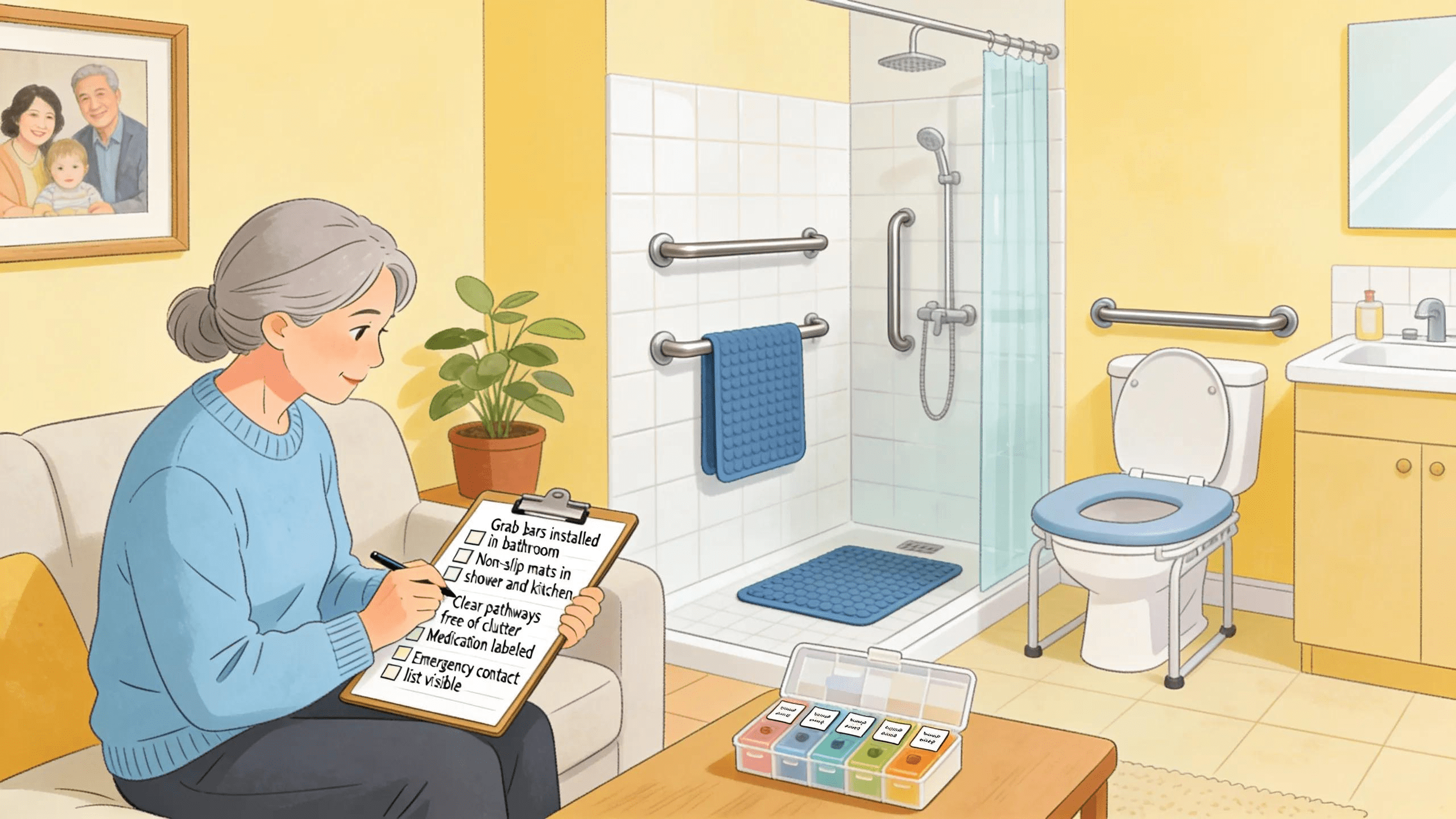
- Bathroom:Install grab bars near toilet and inside shower or bathtub.Use non-slip mats inside and outside the shower area.Consider raised toilet seats to facilitate easier transfers.Maintain good lighting with adjustable brightness controls to reduce glare.
- Bedroom:Place nightlights along the path to the bathroom to decrease fall risks.Remove any loose cords or cords from blinds or curtains to prevent entanglement.Use clear signage or memory aids (e.g., labeled drawers) to encourage independence.Consider bed alarms that notify caregivers if the patient attempts to leave bed unsupervised.
- Outdoor Areas:Secure fencing and locked gates to prevent wandering beyond safe boundaries.Clear walkways of debris or garden tools.Use uneven or natural textures in pathways to discourage wandering into unsafe zones.
Structured Daily Memory Engagement Routine
- Morning:Review the day’s date and weather together using a calendar and weather chart.Engage in simple physical activity such as stretching or a short walk to stimulate cognition and mood.Participate in orientation exercises like recalling family member names or recent events.
- Afternoon:Conduct cognitive stimulation activities like puzzles, memory games, or music therapy tailored to the patient’s abilities.Encourage social interaction, such as phone calls with friends or family visits, to support emotional health.
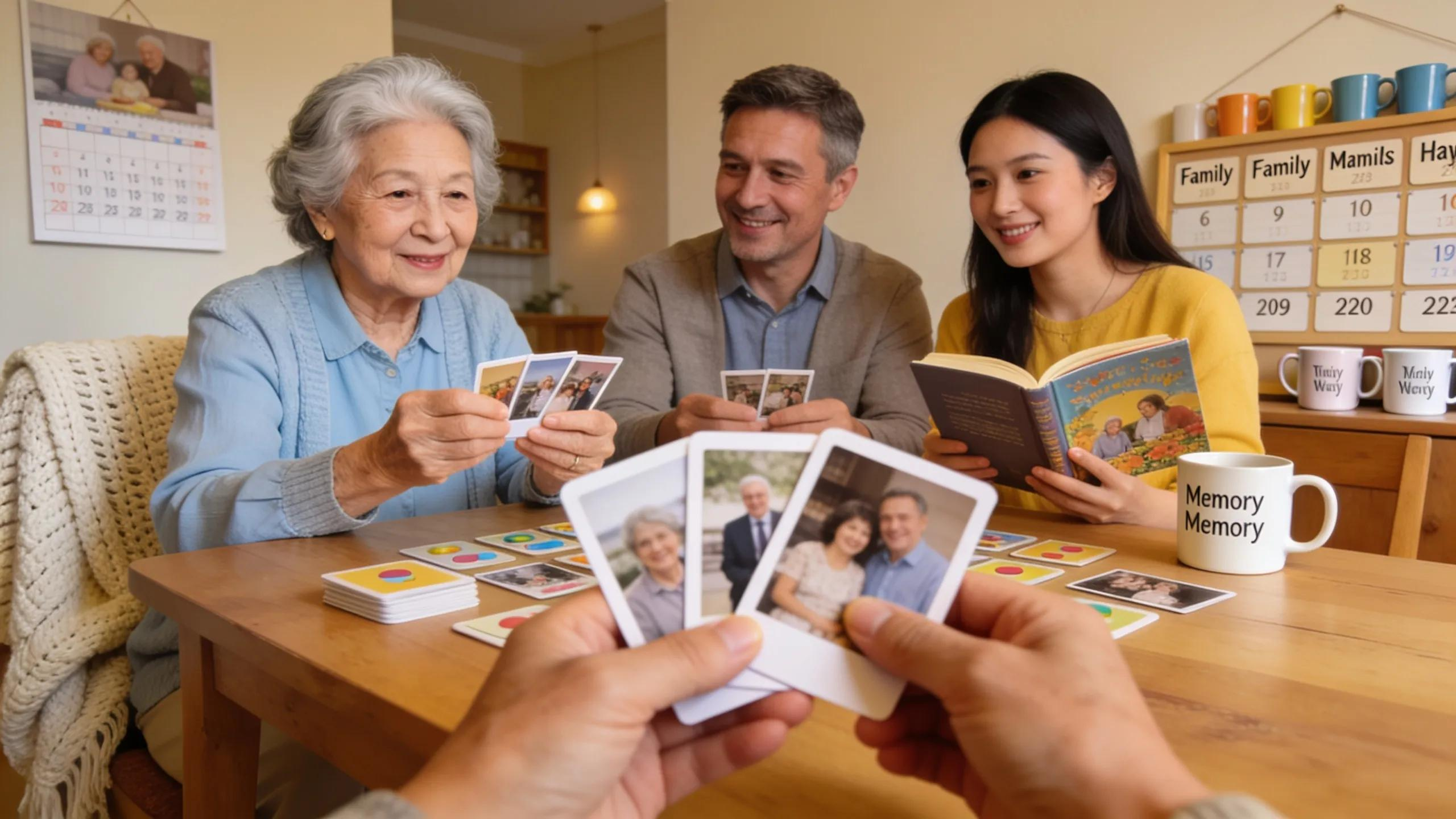
- Evening:Use reminiscence therapy by sharing photos or discussing past experiences to promote memory recall.Establish a calming bedtime routine to reduce agitation and improve sleep quality, incorporating quiet music or reading.
Updated Clinical Safety Protocols for Family Caregivers
- Regular Risk Assessments: Conduct frequent home safety checks as the patient’s condition evolves to adapt the environment accordingly.
- Medication Management: Use pill organizers with alarms and maintain an updated medication chart to prevent errors.
- Behavioral Observation: Monitor changes in behavior or signs of distress, documenting incidents to inform healthcare providers.
- Emergency Preparedness: Develop clear action plans for emergencies including falls, wandering incidents, or sudden health changes, and ensure all caregivers are informed.
- Use of Technology: Incorporate safety technology such as GPS trackers, medical alert systems, and remote monitoring where appropriate.
- Caregiver Support: Engage in ongoing education and seek respite care options to reduce caregiver burnout and maintain high-quality care.