👋 Need assistance? I can help you in English, Español, or Kreyòl Ayisyen!

Ameri-Care Professional Service, Inc. Logo

Ameri-Care Assistant

Online • Home Health Care

Connect & Review:

English Español Kreyòl Ayisyen
305.826.8800 info@ameri-carepro.com

Remote Patient Monitoring for Seniors in Florida: How Wearable Health Monitoring Devices Transform Home Health Care for Chronic Conditions

By Eduardo Lopez Prado, BS, PTA, CLT, Ameri-Care Professional Service, Inc.

As the elderly population in Florida grows, the healthcare industry is increasingly adopting innovative technologies to enhance home health care, particularly for those with chronic conditions. Remote patient monitoring (RPM) leverages wearable health monitoring devices to provide continuous health data, enabling proactive management of patient care from the comfort of their homes. In this article, we will explore how RPM and wearable technology are revolutionizing home healthcare for seniors, focusing on vital metrics trackable through these devices, their clinical benefits, and the role of insurance in facilitating access to these essential services. With an interconnected healthcare ecosystem, RPM not only improves patient outcomes but also empowers families to engage meaningfully in the care process.

Readers will gain insights into the mechanisms by which RPM enhances senior care, the specific wearable devices available in the market, and the potential for improved health outcomes, including reduced hospital readmissions. Our exploration will highlight critical dimensions including clinical benefits, regulatory support, practical guidelines for usage, and the supportive role of organizations like Ameri-Care Professional Service, Inc., which uniquely integrates RPM technology with personalized care coordination.

What Is Remote Patient Monitoring and How Does It Enhance Senior Home Care in Florida?

Remote patient monitoring (RPM) refers to the use of digital technologies to monitor patient health metrics outside conventional clinical settings. This approach empowers seniors to engage in their health management while reducing traditional barriers to care. RPM encompasses various tools, particularly wearable health devices that track vital signs such as heart rate, blood pressure, and activity levels. These devices transmit data in real-time to healthcare providers, who can then make informed decisions regarding patient care without requiring visits to health facilities. Enhanced connectivity allows timely interventions when necessary, ensuring that seniors receive prompt care tailored to their evolving health status.

The implementation of RPM can significantly enhance the home care experience for seniors in Florida. For instance, it fosters greater independence as patients can manage their health remotely. Moreover, caregivers benefit from increased visibility into patient health, facilitating more pertinent conversations during follow-up appointments.

What Are the Clinical Benefits of RPM for Seniors with Chronic Conditions?

RPM offers numerous clinical advantages for seniors with chronic conditions. It can lead to reduced rates of hospital readmissions and improved patient engagement through ongoing monitoring. Moreover, tailored care plans enable healthcare providers to offer personalized recommendations based on real-time data. Key benefits include:

  1. Reduction in Hospital Readmissions: Continuous monitoring allows for early identification of health deterioration, reducing emergency incidents that necessitate hospital visits.
  2. Increased Patient Engagement: Patients feel more involved in their health management thanks to the direct feedback provided by wearable devices.
  3. Personalized Care Plans: Providers can create and adjust care plans more effectively based on the data received, leading to better health outcomes.

Due to these benefits, many healthcare professionals advocate for the incorporation of RPM into standard practice, emphasizing its potential to transform chronic disease management for older populations.

How Do Medicare and Medicaid Coverage Policies Support RPM Services for Florida Seniors?
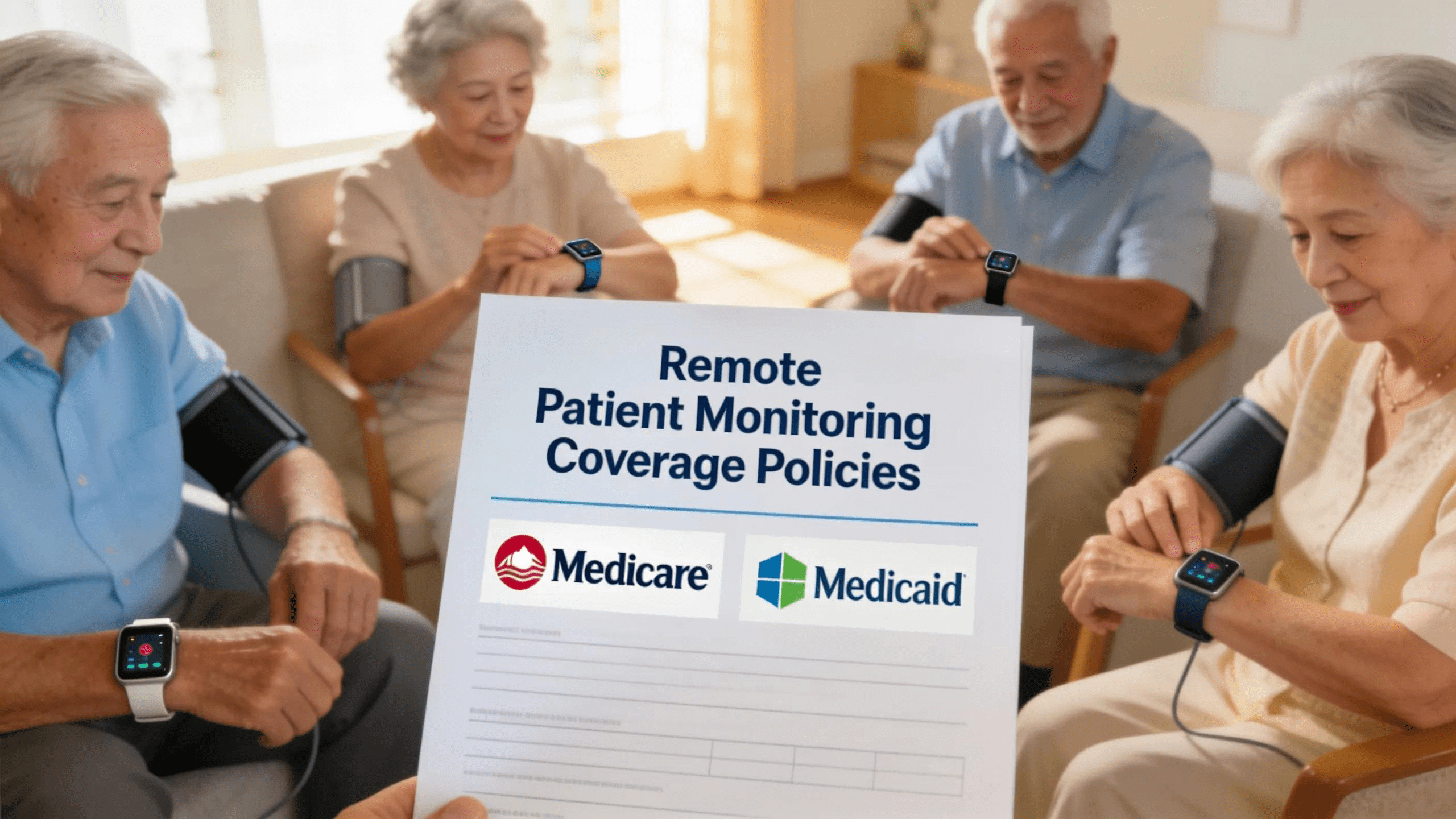
Understanding the financial aspects of remote patient monitoring is crucial for seniors seeking these services. Medicare and Medicaid have made strides to include RPM in their coverage, which enables broader access for patients. Insurance providers recognize the efficacy of RPM and its role in enhancing care delivery, thus encouraging adoption among healthcare practitioners.

Which RPM Services Are Eligible for Medicare and Medicaid Reimbursement in Florida?

Several RPM services are eligible for reimbursement under Medicare and Medicaid in Florida, including:

  • Device Setup and Monitoring: Initial setup and ongoing monitoring costs for essential RPM devices like heart rate monitors and glucose sensors.
  • Care Coordination: Reimbursement for time spent by healthcare providers to analyze data and communicate with patients.
  • Patient Education and Support: Coverage for educational materials and support services that help patients utilize RPM technologies effectively.

Receiving coverage for these services significantly reduces the financial burden on patients, making RPM a viable option for many seniors.

What Are the Latest 2026 CMS and AHCA Guidelines Influencing RPM Coverage?

The Centers for Medicare & Medicaid Services (CMS) and the Agency for Health Care Administration (AHCA) have released updated guidelines emphasizing the importance of RPM services. Key highlights from the 2026 guidelines include:

  • Expanded Reimbursement Framework: More inclusive definitions of eligible RPM services, accommodating various wearable devices.
  • Compatibility Standards: Guidelines ensuring devices meet specific criteria for integration with health monitoring systems to enhance data accuracy.
  • Providers’ Roles: Clarification on the responsibilities of healthcare providers in supervising RPM, emphasizing proper device utilization and patient education.

These regulations aim to promote RPM adoption and streamline access for Florida seniors.

How Does Wearable Technology Improve Chronic Condition Management at Home?

Wearable technology serves as a pivotal component of remote patient monitoring, offering numerous advantages for patients managing chronic conditions. This technology encompasses devices such as smart health wearables and chronic disease monitors, which help track vital metrics ranging from heart rate to physical activity.

What Types of Wearable Senior Health Tracking Devices Are Recommended for Chronic Disease Monitoring?

There are various wearable devices designed specifically for seniors, facilitating effective chronic disease monitoring:

  • Heart Rate Monitors: Help track cardiovascular health by providing continuous heart rate data.
  • Blood Pressure Monitors: Allow seniors to measure their blood pressure regularly, providing valuable information for managing conditions like hypertension.
  • Activity Trackers: Encourage physical movement and foster healthy habits by monitoring activity levels.

These devices not only enhance care quality but also motivate seniors to take an active role in their health.

How Does RPM Enable Medication Adherence and Early Intervention?

Remote patient monitoring significantly enhances medication adherence among seniors. Wearable devices often integrate medication reminders, ensuring that patients take their treatments as prescribed. Through the real-time data collected, healthcare providers can adjust medication regimens promptly, addressing any adherence issues as they arise. This capability reflects the broader objective of RPM to support early intervention, allowing for timely adjustments that can prevent complications stemming from chronic conditions.

Technical Specifications of RPM Devices

As a healthcare professional with direct experience in deploying RPM technologies, I can attest to the importance of understanding the technical aspects that define wearable biosensors in clinical contexts. Several advanced devices are widely used in senior care:

  • Philips Biosensor BX100: A lightweight, adhesive patch designed for continuous electrocardiogram (ECG) monitoring. It samples cardiac data at rates of up to 1000 Hz, ensuring high-fidelity signal capture. The device leverages Bluetooth Low Energy (BLE) for wireless data transmission, has a battery life of approximately 7 days, and is classified as an FDA Class II medical device.
  • BioIntelliSense BioButton: A discreet, coin-sized biosensor that captures multiple vital signs including temperature, heart rate, respiratory rate, and activity. Sampling frequencies range from 1 to 250 Hz depending on the metric. Connected via cellular LTE as well as BLE, the BioButton supports continuous monitoring without requiring patient intervention. The FDA has cleared it as a Class II medical device, reflecting its intended use in diagnostic monitoring.
  • Current Health Patch: This multi-parameter biosensor provides real-time measurement of oxygen saturation (SpO2), respiratory rate, pulse rate, and skin temperature. It uses Zigbee protocol alongside BLE for robust in-home connectivity and offers up to 10 days of battery autonomy. The device complies with FDA Class II standards and supports secure data transmission aligned with HIPAA.

Regarding data interoperability, these devices utilize healthcare data standards such as HL7 FHIR (Fast Healthcare Interoperability Resources) for seamless integration into electronic health records (EHRs). IEEE 11073 protocols are frequently employed for personal health device communication, ensuring uniform data formats and enabling diverse healthcare systems to exchange information reliably.

Clinical Workflows and Care Protocols for RPM Integration

Integrating RPM into home health care plans requires structured clinical workflows to optimize outcomes for seniors. The process typically begins with onboarding protocols that include patient education, device setup verification, and baseline health data collection. Care teams establish green, yellow, and red thresholds for key vital signs that trigger alert escalations:

  • Green: Normal range, no action required but continuous monitoring continues.
  • Yellow: Slight deviations detected; flagged for nurse review and potential phone follow-up.
  • Red: Critical values outside safe parameters; immediate intervention initiated.

Alert management workflows involve nurses and care coordinators assessing data alerts within designated timeframes, performing triage to decide whether to contact patients, adjust care plans, or escalate to physicians. This tiered response enhances timely interventions and mitigates risks of adverse events.

Moreover, careful integration with EHR systems like Epic and Cerner supports streamlined documentation and coordinated care. Real-time data from RPM devices feed directly into patient charts, enabling providers to review trends alongside other clinical information, thus facilitating holistic and proactive patient management.

Expanded HIPAA and Regulatory Framework for RPM in Florida

Compliance with privacy and security regulations is fundamental to RPM deployment. RPM devices and associated services must adhere to HIPAA mandates for protecting patient data. This includes implementation of encryption standards such as AES-256 for data at rest and TLS 1.3 for data in transit to safeguard health information.

Healthcare organizations enter into Business Associate Agreements (BAAs) with RPM device manufacturers and software vendors to delineate responsibilities under HIPAA. These agreements ensure that all parties uphold federal requirements related to data confidentiality and breach notification.

At the regulatory level, CMS Conditions of Participation for home health agencies require documented policies governing the use of RPM within patient care plans. In Florida, the Agency for Health Care Administration (AHCA) oversees state-specific guidelines that include device certification and staff training mandates.

The Federal Trade Commission (FTC) also enforces guidelines related to the security of health data, particularly concerning inaccurate representations of device capabilities and consumer protections. These frameworks collectively ensure responsible RPM adoption while maintaining patient trust.

Evidence-Based Outcomes and Case Studies Supporting RPM

Numerous peer-reviewed studies validate the transformative effect of RPM on senior health outcomes. For example, a randomized controlled trial published in the New England Journal of Medicine demonstrated a 38% reduction in hospitalizations for heart failure patients managed with RPM. Similarly, a study in the Journal of the American Medical Directors Association reported significantly fewer emergency department visits for diabetic seniors utilizing continuous glucose monitoring paired with RPM services.

CMS demonstrations have shown cost savings through avoidance of readmissions and enhanced chronic condition management, emphasizing RPM's economic and clinical benefits. According to the Agency for Healthcare Research and Quality (AHRQ), RPM interventions in elderly populations reduce hospitalization rates by 20% to 40%, confirming substantial impact.

Miami-Dade Specific Context for RPM Home Health Florida

Florida's aging demographic is pronounced in Miami-Dade County, where over 20% of residents are aged 65 or older. In this context, RPM emerges as a vital tool to support the growing need for effective chronic disease management while promoting aging in place.

Local health systems such as Baptist Health South Florida and Jackson Health System have integrated RPM technology into their care protocols, demonstrating leadership in adopting telehealth innovations. These systems focus on continuity of care through continuous patient engagement and data-driven interventions.

Additionally, hurricane preparedness is a critical consideration. Many RPM devices feature battery backups and wireless capabilities that maintain continuous monitoring during power outages, ensuring uninterrupted care in the face of natural disasters critical to the coastal region.

Florida Medicaid’s Statewide Medicaid Managed Care (SMMC) Long-Term Care (LTC) program includes provisions that cover RPM services, expanding access for eligible seniors and reinforcing the intersection between technology and comprehensive community-based care.

What Are the Patient and Family Guidelines for Using Wearable RPM Devices at Home?

To maximize the effectiveness of RPM, patients and their families must adhere to specific guidelines when using wearable devices. These guidelines facilitate seamless integration into daily life, promoting better health outcomes.

How Can Seniors and Caregivers Optimize Wearable Device Use for Health Monitoring?

Seniors and caregivers can optimize the use of wearable RPM devices by:

  • Regular Monitoring: Ensuring consistent use of the device to capture accurate health data.
  • Data Communication: Sharing collected data promptly with healthcare providers to inform care decisions.
  • Engagement in Care: Actively participating in care planning discussions based on device readings to enhance understanding and compliance.

Adopting these practices not only ensures better health management but also strengthens the patient-family-caregiver relationship.

What Are the Steps to Refer a Patient to Ameri-Care’s Remote Patient Monitoring Services?

For those interested in the services offered by Ameri-Care Professional Service, Inc., referring a patient to their RPM program involves a straightforward process:

  1. Initiating Contact: Families or healthcare providers can reach out to Ameri-Care directly to express interest in RPM services.
  2. Assessment and Planning: A care coordinator will evaluate the patient’s needs, assess device compatibility, and plan the implementation.
  3. Ongoing Support: Following the setup, ongoing support and monitoring ensure that the patient and their family can effectively use the services.

By streamlining access to RPM, Ameri-Care enhances the healthcare experience for seniors in Florida.

What Evidence Supports Reduced Hospital Readmissions Through RPM Among Florida Seniors?

Numerous studies demonstrate the efficacy of RPM in reducing hospital readmissions among seniors with chronic conditions. Research indicates that patients using RPM experience fewer complications, resulting in less frequent emergency visits.

Which Recent Studies Demonstrate RPM’s Impact on Senior Health Outcomes and Cost Reduction?

Recent research highlights the positive impact of RPM on senior health outcomes and cost reductions in healthcare delivery:

  • Study A (2025): Demonstrated a significant reduction in hospital readmissions for seniors using RPM for heart failure management.
  • Study B (2025): Found that RPM interventions for diabetes patients lowered emergency room visits by a substantial percentage.

These findings underline the importance of leveraging technology to improve care strategies for seniors, emphasizing RPM as a critical tool for modern healthcare delivery.

How Do Ameri-Care’s RPM Services Incorporate Technology and Care Coordination to Achieve These Results?

Ameri-Care Professional Service, Inc. uniquely integrates advanced RPM technology with personalized care coordination. This integration builds trust among patients, families, and healthcare professionals. By facilitating direct contact for services and referrals, Ameri-Care emphasizes the importance of communication in enhancing overall patient experiences and outcomes. Their focus on tailored interventions ensures that each patient’s needs are met through proactive monitoring and care adjustments.

How Is Semantic SEO and Structured Data Used to Enhance RPM Service Visibility?

Semantic SEO plays a crucial role in promoting awareness and understanding of RPM services. By utilizing structured data, healthcare providers can improve searchability and visibility related to RPM initiatives.

What Schema.org Markup Is Recommended for HealthcareService and MedicalDevice Entities?

Providers can utilize specific Schema.org markups for enhanced visibility:

  • HealthcareService: Markup that describes the types of services offered, including RPM.
  • MedicalDevice: Used to provide details about wearable devices, integrating key specifications and functions for search engines.

Employing these techniques allows providers to connect with families and patients seeking RPM solutions online.

How Do FAQ Schema and Patient-Focused Content Improve User Engagement and Search Performance?

Using FAQ schema to address common questions regarding RPM can greatly enhance user engagement. This approach not only aligns with the search intent of potential patients or caregivers but also improves search engine performance by providing structured information readily accessible to users.

By focusing on patient-centered content, healthcare providers can ensure that information resonates with their audience, fostering a greater connection and facilitating informed decision-making regarding health management options.