
305.826.8800 [email protected]

IV Therapy Home Miami: Home IV Therapy and Parenteral Nutrition

By Ameri-Care Professional Service, Inc. Editorial Team · Updated 2026-08-05

Home IV therapy and parenteral nutrition support requires licensed clinicians for catheter care, infusion monitoring, and nutrient formulation adjustments. Ameri-Care Professional Service, Inc., based in Miami Lakes, FL, employs 95 staff members delivering coordinated home infusion services, patient education, and ongoing clinical oversight to ensure safe, effective treatment outside hospital settings.

Total parenteral nutrition delivers nutrients through a central venous catheter, such as a PICC line, directly into a large vein for patients unable to meet nutritional needs orally. Providers like Ameri-Care Professional Service, Inc., based in Miami Lakes, FL, with 95 employees, support home infusion and nutrition therapy management.

Home IV therapy and parenteral nutrition support delivers nutrients directly into the bloodstream through a central venous catheter, such as a PICC line, for patients unable to meet nutritional needs orally or through enteral feeding. Skilled nursing oversight manages catheter care, infusion scheduling, and complication monitoring, allowing patients to receive hospital-level nutrition therapy safely within a home setting.

Key Takeaways

  • Home parenteral nutrition (HPN) delivers essential nutrients through a vein for patients unable to eat normally.
  • Patients receive parenteral nutrition at home, reducing hospital visits and improving overall quality of life significantly.
  • Intravenous feeding enters the bloodstream directly, bypassing the digestive tract for those with absorption issues.
  • Northwestern Memorial Hospital provides comprehensive home care guides for total parenteral nutrition (TPN) patient education and support.

What Does Home IV Therapy and Nutrition Support Involve?

Home IV therapy in Miami combines skilled nursing visits, infusion management, and nutritional support delivered directly at a patient's residence. Families who skip structured planning during a hospital discharge face missed medication doses and delayed catheter care. Ameri-Care Professional Service, Inc. built home infusion services to close that gap.

Moving from a hospital bed to a home bedroom rarely happens without guidance. The transition requires coordinated medication management alongside clinical oversight of infusion-related needs. Little gets left to chance between discharge paperwork and the first home visit.

What Services Fall Under Home Infusion Care?

Home infusion services blend several clinical disciplines rather than one narrow specialty. Skilled nursing, therapy, and personal care work together to support patients managing complex conditions, including those requiring intravenous treatment. This combination addresses medical needs and daily living support within a single coordinated plan.

Before starting treatment, patients and caregivers benefit from a few preparatory steps:

  1. Review the full scope of available services, including skilled nursing support, before any infusion begins.
  2. Confirm how rehabilitation therapy fits into the broader recovery plan at home.
  3. Identify whether nutritional needs call for home parenteral nutrition, delivered directly into the bloodstream through an IV catheter.
  4. Schedule an initial nursing assessment to finalize the infusion and nutrition care plan.

Who Needs Home Parenteral Nutrition?
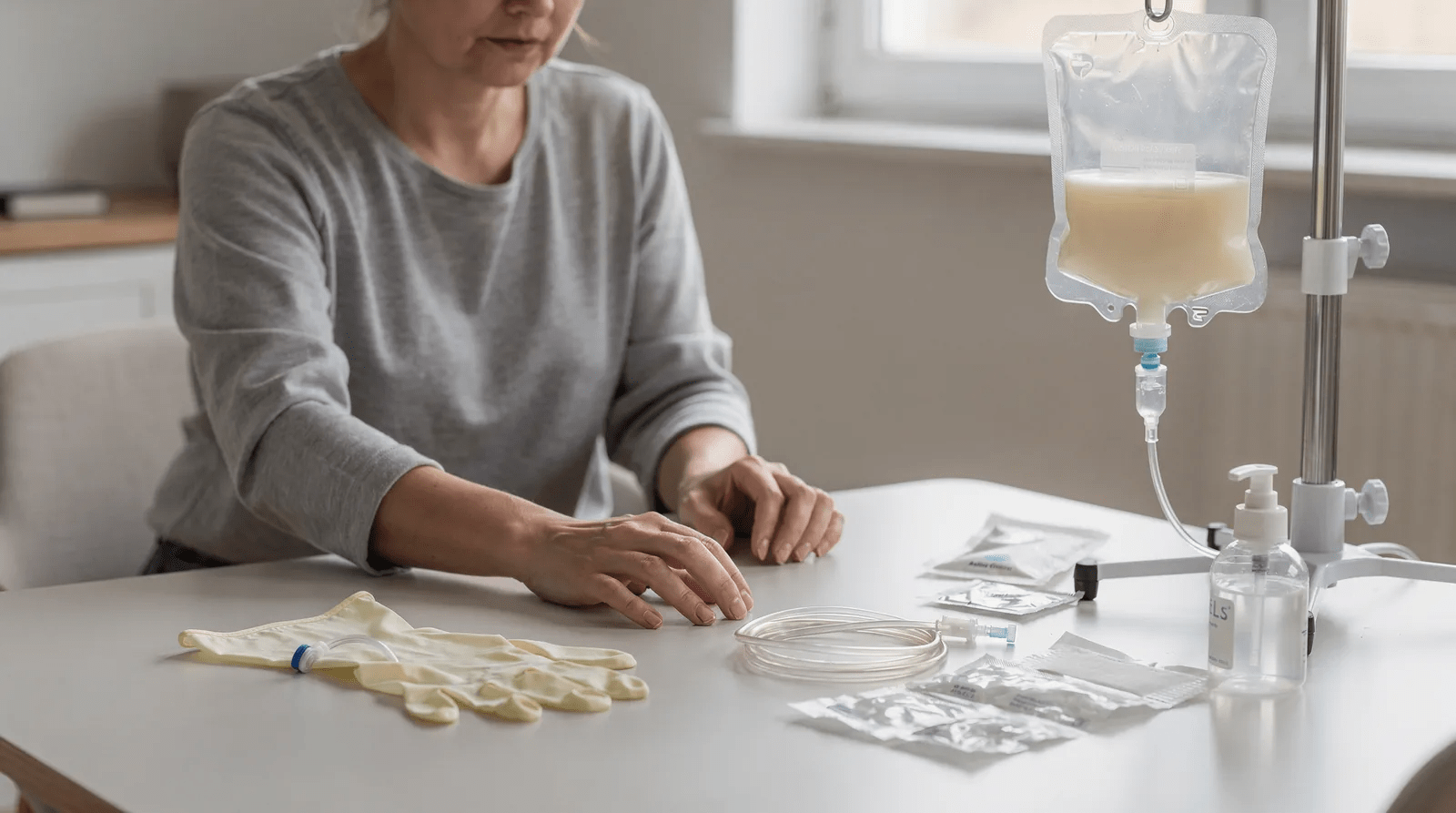
Patients whose digestive systems cannot absorb adequate nutrition through oral intake or tube feeding often require this bloodstream-based delivery method. Bypassing the gut entirely, the therapy sustains nutritional status when eating enough food is not possible.

How Should You Prepare Before Starting Home TPN?

Preparation for home total parenteral nutrition begins with catheter placement and continues through caregiver education. Patients receive nutrients directly into the bloodstream through a central venous catheter. A peripherally inserted central catheter (PICC) in the arm or a port placed in the upper chest. Skipping this groundwork raises the risk of catheter complications and unplanned hospital visits once treatment starts at home.

Ameri-Care Professional Service, Inc. structures its home infusion services around programs designed to promote safe, comfortable nutrition support before infusion ever begins. Skilled nursing staff walk patients and family caregivers through catheter care, infection-prevention steps, and household safety practices ahead of the first treatment. This same groundwork supports patients pursuing iv therapy home Miami for ongoing intravenous nutrition outside a hospital setting.

What Steps Should Patients Take Before the First TPN Infusion?

Preparation follows a defined sequence. Each step builds toward a safer transition from hospital or clinic to home.

  1. Confirm catheter placement and type — PICC line or chest port — with the care team.
  2. Review parenteral nutrition support goals and formula requirements with a dietitian or physician.
  3. Schedule skilled nursing visits to train caregivers on catheter maintenance and sterile technique.
  4. Set up a clean, well-lit space at home for supply storage and infusion preparation.
  5. Confirm around-the-clock access to clinical support for questions or complications.

Why Does Preparation Matter for Long-Term Outcomes?
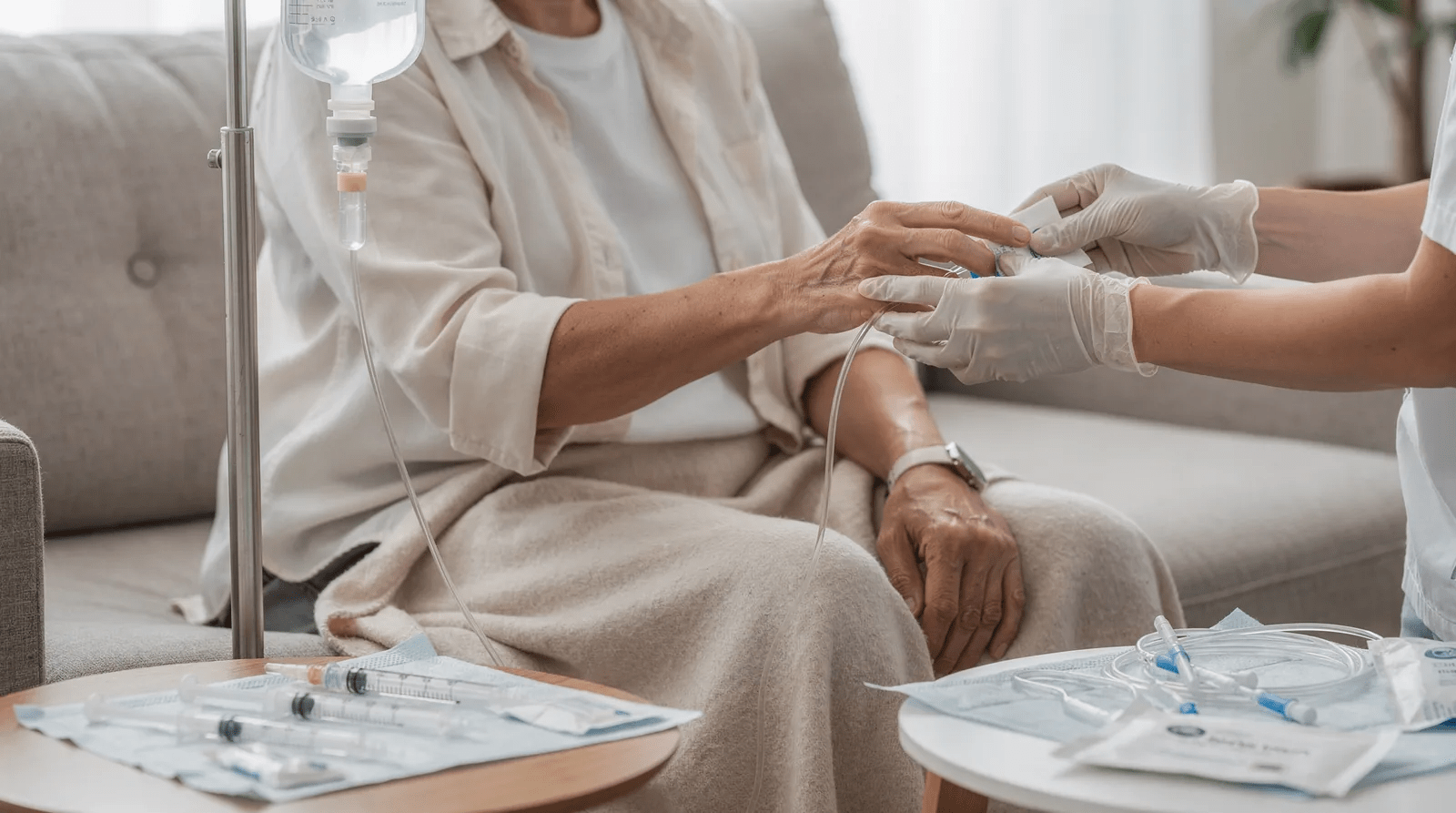
Thorough preparation shapes recovery. Research on home health outcomes consistently favors patients who transition carefully from hospital stays to home-based treatment over those who remain hospitalized longer than necessary. Patients who complete each step before their first infusion tend to face fewer disruptions once home-based nutrition therapy begins in earnest.

What Are the Steps to Administer TPN at Home?

Administering home infusion services for total parenteral nutrition follows a defined sequence: preparation, connection, infusion, and disconnection. Patients moving from hospital treatment often shift from a continuous 24-hour drip to a 12- to 16-hour cycle, typically run overnight while the household sleeps.

Certain prerequisites must be confirmed before infusion begins. A skilled nurse verifies catheter placement, checks the nutrient formula against the physician's order, and reviews pump settings with the patient or caregiver. Caregivers should complete hands-on training in sterile technique and pump troubleshooting before managing infusions independently.

The core administration sequence includes:

  1. Gather supplies — gloves, pump, tubing, and the TPN bag brought to room temperature.
  2. Wash hands and prepare a clean, uncluttered workspace.
  3. Inspect the bag for clarity, correct labeling, and expiration date.
  4. Connect tubing to the bag and prime the line to clear air bubbles.
  5. Attach the line to the catheter using sterile, no-touch technique.
  6. Program the pump for the 12- to 16-hour overnight infusion window.
  7. Start the infusion and confirm the flow rate matches the prescribed order.
  8. Monitor vital signs and catheter site at intervals set by the care plan.
  9. Flush the catheter and disconnect once the cycle finishes.
  10. Record infusion data and report irregularities to the nursing team immediately.

How Does Skilled Nursing Support Ongoing TPN Care?

Coordinated nursing visits integrate infusion oversight with therapy and personal care under one home plan. Nurses catering to seniors and individuals with disabilities monitor catheter sites, adjust care schedules, and coordinate with therapy staff during the same visit window.

Who Coordinates TPN With Broader Recovery Needs?

Care coordination support connects IV therapy at home in Miami with the larger post-acute recovery process. This guidance addresses medication management, infusion-related tasks, and rehabilitation therapy so patients regain independence without gaps in Ameri-Care parenteral nutrition oversight.

How Is Ongoing Home Infusion Care Monitored?

Weekly contact anchors the monitoring process for patients receiving home infusion services in Miami Lakes and surrounding communities. Care teams reach out on a set schedule to review nutrition-related concerns, catching problems before they escalate into hospital visits. This structure keeps parenteral nutrition support consistent even as a patient's condition changes week to week.

Monitoring for IV therapy at home in Miami follows a defined sequence rather than a single check-in:

  1. A clinician contacts the patient each week to ask a series of standardized nutrition questions.
  2. The care team reviews responses and flags any changes in tolerance, appetite, or catheter site condition.
  3. Adjustments to the treatment plan get made based on those weekly findings.
  4. Skilled nursing, therapy, and personal care staff stay engaged throughout the infusion period, addressing needs beyond nutrition alone.

That last step matters because infusion therapy rarely happens in isolation. Many patients also require physical therapy, wound care, or assistance with daily activities, and Ameri-Care Professional Service, Inc. coordinates those disciplines under one plan. With 95 employees supporting home care delivery across Miami Lakes, the agency structures oversight so no single aspect of care is monitored in a vacuum.

Who else is involved in monitoring besides the clinical team?

Family caregivers play a direct role in day-to-day observation between scheduled contacts. Clear guidance on what to watch for — fever, redness at the infusion site, unusual fatigue — reduces caregiver stress and supports better outcomes for the patient. Structured education of this kind eases the burden families often carry during complex home treatment.

What happens if a weekly check reveals a problem?

The care team escalates concerns immediately rather than waiting for the next scheduled call. Adjustments to fluids, nutrients, or infusion timing follow directly from that weekly review, keeping the treatment plan responsive rather than static.

What Mistakes Should You Avoid With Home Infusion?

Three errors account for most complications in home-based intravenous care: misjudging digestive tract status, skipping rehabilitation coordination, and underestimating the hospital-to-home transition. Each mistake carries consequences that extend recovery time and strain family caregivers. Avoiding them starts with understanding what separates safe parenteral nutrition support from risky guesswork.

Mistake 1: Ignoring digestive tract function. Families pursuing iv therapy home Miami services must track whether the digestive tract is nonfunctioning or must stay free of food entirely. This distinction determines whether continued intravenous feeding remains medically necessary, rather than a temporary bridge. Skipping this assessment leads to premature discontinuation or unnecessary prolonged therapy.

Mistake 2: Neglecting rehabilitation support. Patients receiving home infusion services alongside recovery from illness or surgery often need coordinated physical therapy. Overlooking that connection slows functional recovery and delays independence.

Mistake 3: Underpreparing for the transition home. Moving from hospital to home overwhelms many families without proper guidance on skilled nursing and therapy support.

What should families check before starting home infusion?

Families should confirm digestive tract status with the care team first. A nonfunctioning tract or one requiring rest from food changes the entire nutrition plan.

Does physical therapy matter during infusion treatment?

Yes. Coordinated therapy prevents deconditioning while nutrition support continues, keeping recovery on track rather than stalled.

  • Confirm digestive tract function before starting therapy
  • Arrange physical therapy alongside infusion care
  • Request structured discharge planning before leaving the hospital

Home intravenous therapy and parenteral nutrition support represent critical interventions that enable patients to receive essential clinical care within their residential environments. These specialized services demand rigorous clinical protocols, skilled professional administration, and unwavering commitment to patient safety and therapeutic outcomes. By integrating evidence-based practices with individualized care planning, home health providers deliver the clinical expertise necessary to support patient recovery, maintain nutritional status, and preserve independence during complex medical circumstances.

FAQ

What is home parenteral nutrition?

Home parenteral nutrition delivers essential nutrients directly into the bloodstream through a central venous catheter, such as a PICC line, for patients unable to meet nutritional needs orally or through enteral feeding.

Who provides home IV therapy and parenteral nutrition support in Miami?

Ameri-Care Professional Service, Inc., based in Miami Lakes, FL, with 95 employees, provides skilled nursing oversight for catheter care, infusion scheduling, and complication monitoring within the home setting.

What happens before starting home TPN?

Preparation begins with catheter placement and continues through caregiver education, followed by an initial nursing assessment that finalizes the infusion and nutrition care plan.

Facts

  • Ameri-Care Professional Service, Inc. is located in Miami Lakes, FL, US.
  • Ameri-Care Professional Service, Inc. has 95 employees.