


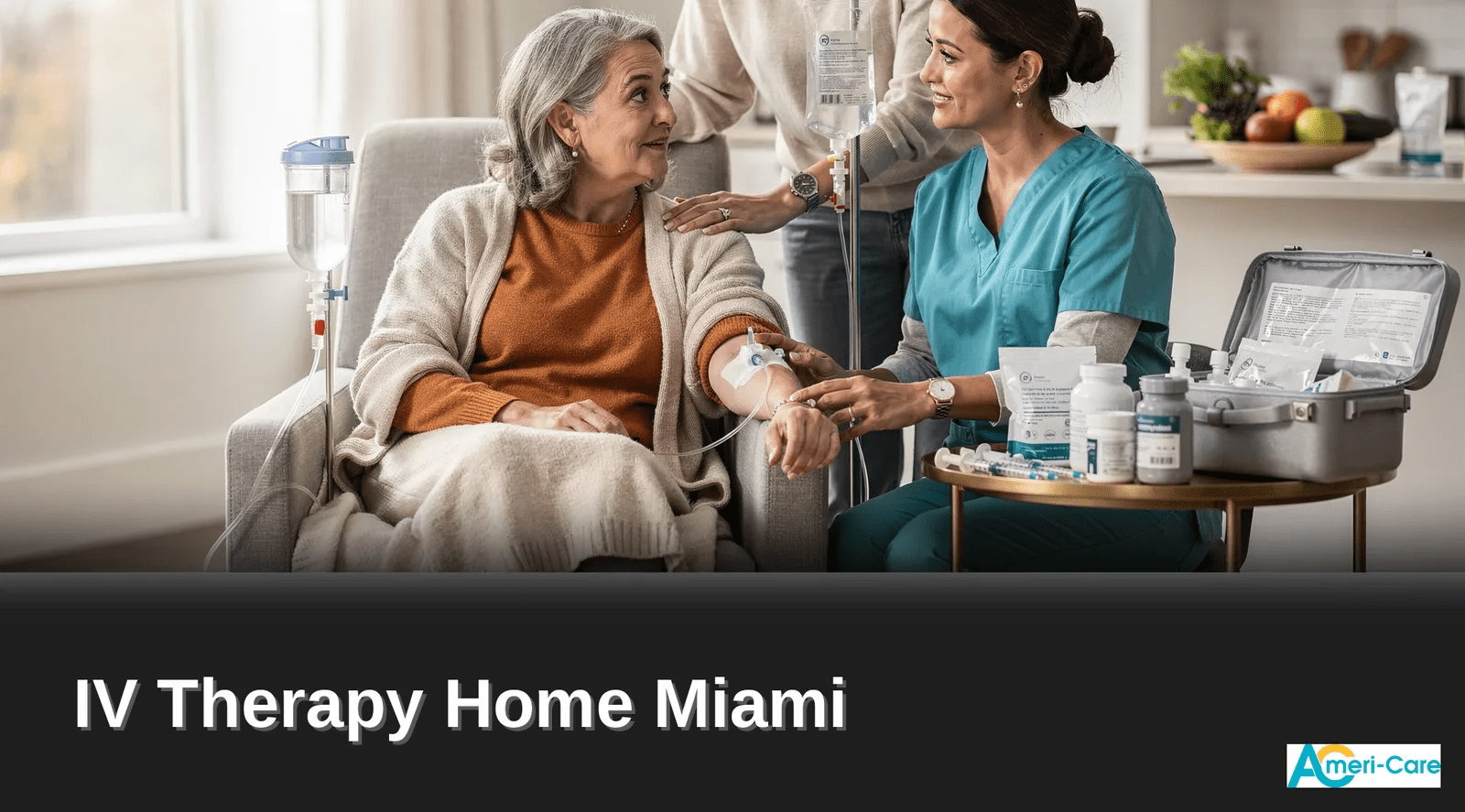
IV Therapy Home Miami: Home IV Therapy and Parenteral Nutrition
Key Takeaways
- Home parenteral nutrition (HPN) delivers essential nutrients through a vein for patients unable to eat normally.
- Patients receive parenteral nutrition at home, reducing hospital visits and improving overall quality of life significantly.
- Intravenous feeding enters the bloodstream directly, bypassing the digestive tract for those with absorption issues.
- Northwestern Memorial Hospital provides comprehensive home care guides for total parenteral nutrition (TPN) patient education and support.
What Does Home IV Therapy and Nutrition Support Involve?
What Services Fall Under Home Infusion Care?
- Review the full scope of available services, including skilled nursing support, before any infusion begins.
- Confirm how rehabilitation therapy fits into the broader recovery plan at home.
- Identify whether nutritional needs call for home parenteral nutrition, delivered directly into the bloodstream through an IV catheter.
- Schedule an initial nursing assessment to finalize the infusion and nutrition care plan.
Who Needs Home Parenteral Nutrition?
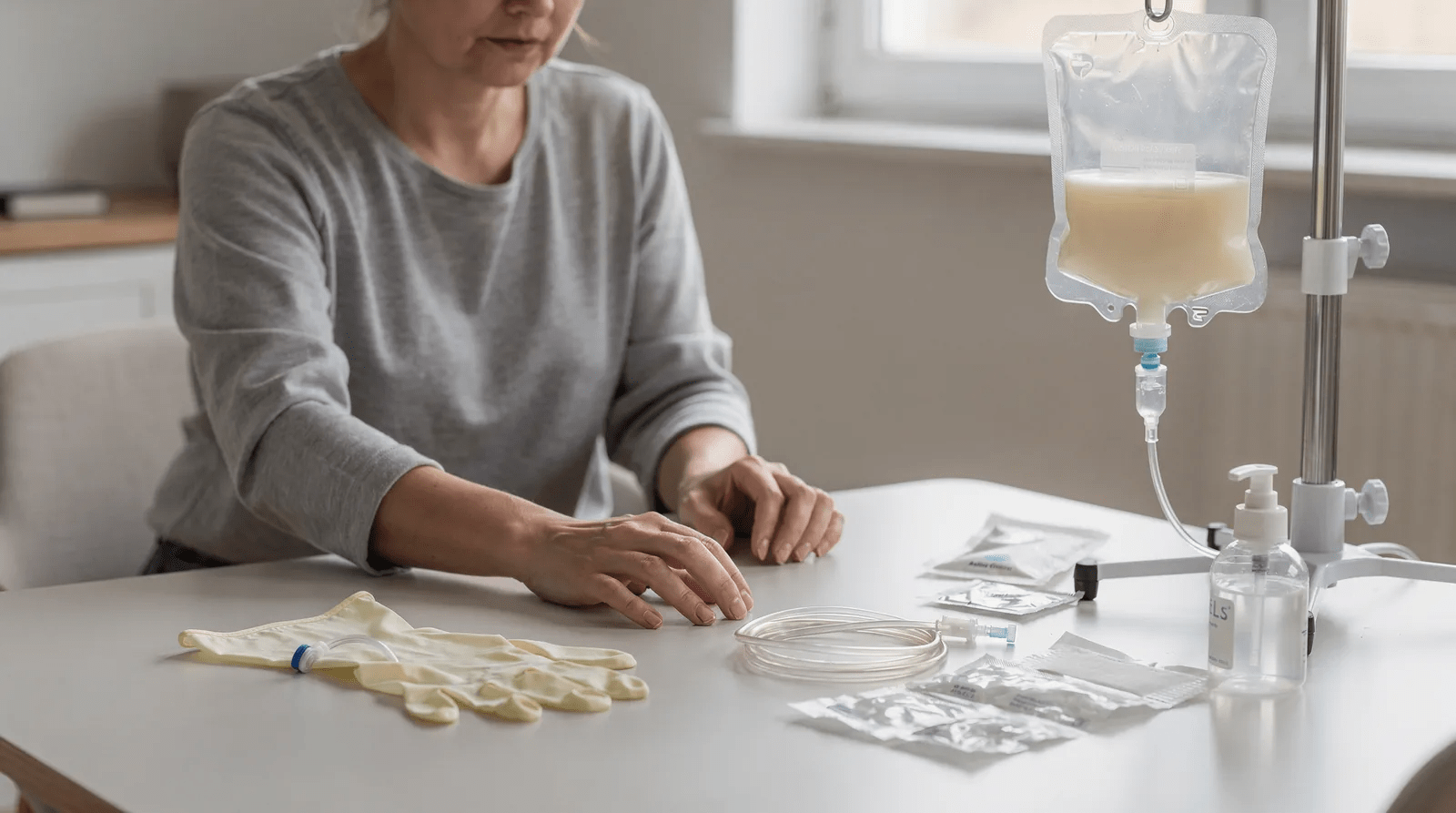
How Should You Prepare Before Starting Home TPN?
What Steps Should Patients Take Before the First TPN Infusion?
- Confirm catheter placement and type — PICC line or chest port — with the care team.
- Review parenteral nutrition support goals and formula requirements with a dietitian or physician.
- Schedule skilled nursing visits to train caregivers on catheter maintenance and sterile technique.
- Set up a clean, well-lit space at home for supply storage and infusion preparation.
- Confirm around-the-clock access to clinical support for questions or complications.
Why Does Preparation Matter for Long-Term Outcomes?
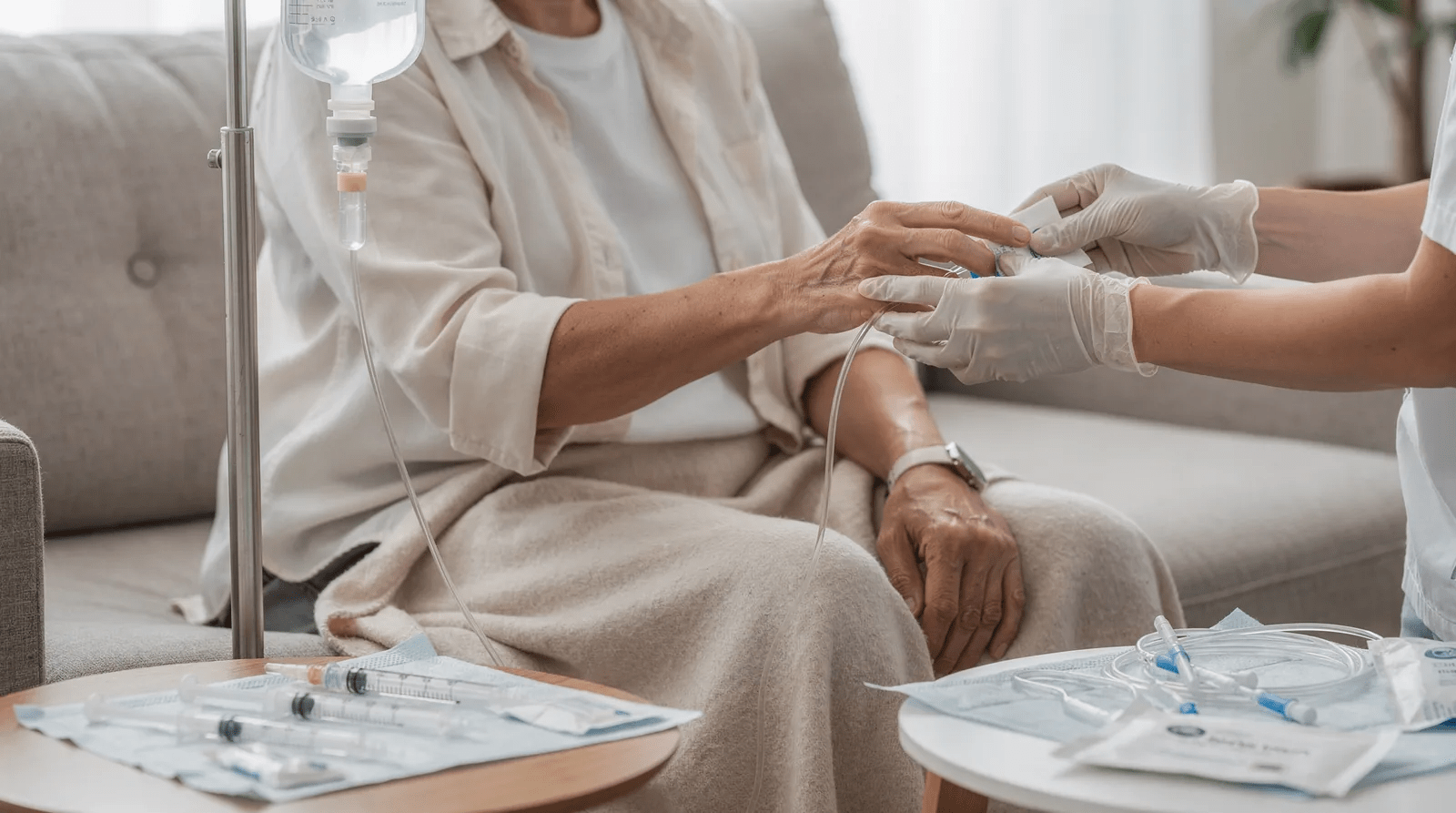
What Are the Steps to Administer TPN at Home?
- Gather supplies — gloves, pump, tubing, and the TPN bag brought to room temperature.
- Wash hands and prepare a clean, uncluttered workspace.
- Inspect the bag for clarity, correct labeling, and expiration date.
- Connect tubing to the bag and prime the line to clear air bubbles.
- Attach the line to the catheter using sterile, no-touch technique.
- Program the pump for the 12- to 16-hour overnight infusion window.
- Start the infusion and confirm the flow rate matches the prescribed order.
- Monitor vital signs and catheter site at intervals set by the care plan.
- Flush the catheter and disconnect once the cycle finishes.
- Record infusion data and report irregularities to the nursing team immediately.
How Does Skilled Nursing Support Ongoing TPN Care?
Who Coordinates TPN With Broader Recovery Needs?
How Is Ongoing Home Infusion Care Monitored?
- A clinician contacts the patient each week to ask a series of standardized nutrition questions.
- The care team reviews responses and flags any changes in tolerance, appetite, or catheter site condition.
- Adjustments to the treatment plan get made based on those weekly findings.
- Skilled nursing, therapy, and personal care staff stay engaged throughout the infusion period, addressing needs beyond nutrition alone.
Who else is involved in monitoring besides the clinical team?
What happens if a weekly check reveals a problem?
What Mistakes Should You Avoid With Home Infusion?
What should families check before starting home infusion?
Does physical therapy matter during infusion treatment?
- Confirm digestive tract function before starting therapy
- Arrange physical therapy alongside infusion care
- Request structured discharge planning before leaving the hospital
FAQ
What is home parenteral nutrition?
Who provides home IV therapy and parenteral nutrition support in Miami?
What happens before starting home TPN?
Facts
- Ameri-Care Professional Service, Inc. is located in Miami Lakes, FL, US.
- Ameri-Care Professional Service, Inc. has 95 employees.