305.826.8800 [email protected]
Home Health After a Fall or ER Visit: What Families Should Do Next

Home Health After a Fall or ER Visit: What Families Should Do Next

A fall or emergency room visit can change everything in one day. Even when the person comes home the same day, the family may suddenly be dealing with pain, fear of another fall, new instructions, or a change in medication. That is often when home health becomes useful.

Home health after a fall or ER visit is meant to help the person recover safely at home, reduce confusion, and watch for problems that might get worse. It is not the same as general caregiving or household help. It is skilled support tied to a medical need.

Why the first days matter

The first few days after a fall or ER visit are often the most confusing. The person may still be sore, dizzy, weak, or nervous about moving. The family may not be sure which symptoms are expected and which ones need a call to the doctor. That is why the home plan should be clear from the start.

If the ER gave new medication, new restrictions, a walker, or instructions about resting the injured area, those details should be written down and reviewed in plain language.

When home health may help

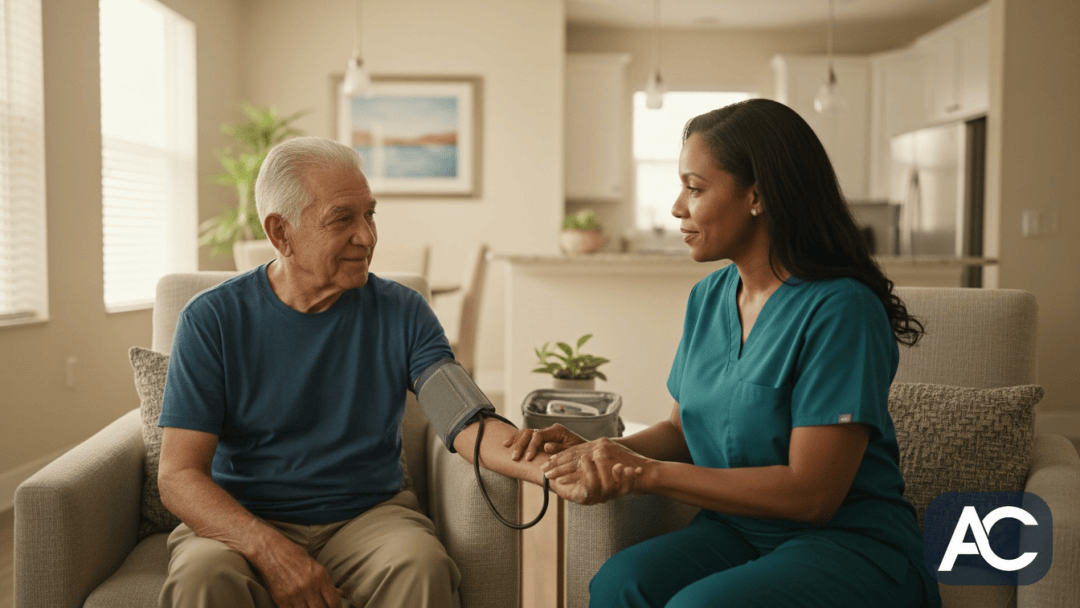
Home health may be appropriate when the person needs skilled nursing, wound care, medication teaching, therapy, or monitoring after the fall or ER visit. For example, a nurse may review medications after a medication change, check a wound or bruise that needs follow-up, or help the family understand when to call the doctor.

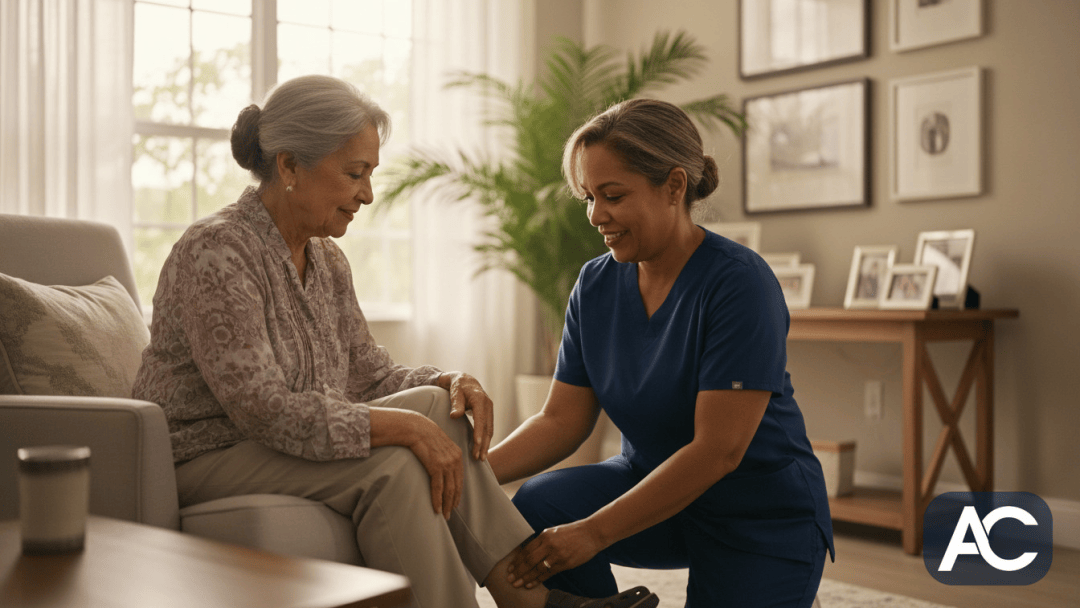
Physical or occupational therapy may also be recommended if the person needs help walking, transferring, using a walker, or getting back to a safe routine. The goal is to help the person recover without falling again or returning to the ER for a preventable issue.

Warning signs that need quick attention

  • Worsening pain instead of gradual improvement
  • Confusion, dizziness, or a change in alertness
  • Shortness of breath or chest pain
  • Bleeding, swelling, or a wound that looks worse
  • Another fall or near-fall
  • New weakness or trouble walking safely

Some signs mean the family should call the doctor right away. Others may require emergency care. Families should not wait if the person looks significantly worse, has trouble breathing, or seems much less responsive than before.

What families should do at home

The home should be checked for obvious fall risks. Clear walkways, secure rugs, good lighting, and reachable essentials can all reduce risk. If the fall happened in the bathroom, extra attention should go to the tub, toilet, towels, and floor surfaces. If the person is using a walker or cane, make sure it is the right height and easy to reach.

The family should also keep the discharge papers, medication list, follow-up appointments, and phone numbers in one place. A simple folder near the kitchen or on the counter can save time when questions come up.

Questions to ask the agency

  • What skilled service is being provided and why?
  • How often will the nurse or therapist visit?
  • What should we watch for between visits?
  • What changes would mean the plan needs to be reviewed?
  • Who should we call first if symptoms get worse?

Those questions help the family understand what the service is doing and what happens if the person improves or declines.

How home health supports recovery

A good home health plan after a fall or ER visit usually focuses on three things: safety, teaching, and monitoring. Safety means reducing the chance of another fall. Teaching means helping the family understand medications, mobility, and warning signs. Monitoring means noticing early if the person is not recovering as expected.

That combination is especially valuable for older adults, people with chronic conditions, and anyone whose balance, strength, or confidence changed after the incident.

When to consider follow-up care beyond home health

Some people improve quickly, while others need a longer support plan. If the family realizes the person needs more help with bathing, meals, or supervision than home health alone can provide, it may be time to discuss added support. Home health can be part of the recovery plan, but it does not replace every other type of help a person may need.

The key is to keep asking whether the current plan still fits the person’s actual condition.

Final thought

After a fall or ER visit, the goal is not just to get home. The goal is to recover safely, understand the instructions, and reduce the risk of another emergency. Home health can help families do that by bringing skilled support into the home when it is needed most.

FAQ

Does every fall require home health?

No. It depends on whether the person has a skilled need after the fall or ER visit.

Can home health help prevent another fall?

It can help by improving safety, teaching the family, and watching for changes that raise fall risk.

Should we call the doctor or the agency first?

Follow the discharge instructions. If the situation is urgent, seek emergency care.

How therapy fits into the recovery plan

If the fall affected walking, balance, or strength, therapy may be part of the home-health plan. Physical therapy can help the person move more safely, while occupational therapy can focus on daily tasks like bathing, dressing, and getting in and out of a chair. Those services are especially useful when the person feels unsteady or afraid to move after the incident.

Families should ask what exercises are safe, how often they should be done, and whether any movements should be avoided. A simple home exercise routine can help, but it should match the person’s condition and the therapist’s guidance.

Home changes that can lower risk

After a fall, small changes at home can make a big difference. Remove clutter from walkways, keep shoes and cables out of the path, and make sure the person has enough light to see at night. In the bathroom, non-slip surfaces and nearby support are especially important.

If the family notices that the person needs to hold furniture to walk, seems fearful in certain rooms, or has trouble stepping over a threshold, those are signs the home setup should be reviewed carefully.

Why follow-up appointments matter

It is easy to focus on the immediate emergency and forget the follow-up visit. But the doctor’s appointment after an ER visit is where the family can confirm whether the person is healing as expected, whether medication changes are working, and whether any new concerns need attention.

Bring the discharge papers and the medication list to that visit. Ask what symptoms are normal, what symptoms are not, and when the family should call back. That follow-up helps prevent small problems from becoming bigger ones.

What a good home-health visit should feel like

A good visit should feel practical and reassuring. The nurse or therapist should explain what they are doing, how the family can help, and what warning signs matter between visits. The family should not leave the visit confused about the next step.

When home health is working well, it gives the family structure. They know what to watch, what to do, and who to call. That clarity is often what makes recovery safer after a fall or ER visit.

Sources

Qué deben preguntar las familias antes de elegir hospice, cuidados paliativos o salud en el hogar

Qué deben preguntar las familias antes de elegir hospice, cuidados paliativos o salud en el hogar

Cuando un ser querido necesita más apoyo, las familias pueden escuchar tres opciones al mismo tiempo: hospice, cuidados paliativos y salud en el hogar. Las palabras suenan parecidas, pero no significan lo mismo. Cada una tiene un propósito distinto, y la mejor opción depende de la condición de la persona, sus metas y sus necesidades actuales.

Saber qué preguntar antes de elegir un servicio puede ahorrar tiempo, reducir estrés y ayudar a la familia a sentirse más segura sobre el siguiente paso.

Empiece por la meta principal

La primera pregunta es sencilla: ¿cuál es la meta principal ahora? Si la meta es confort y alivio de síntomas durante una enfermedad grave, los cuidados paliativos pueden ser el punto de partida correcto. Si la meta es atención al final de la vida con un horizonte de tiempo limitado, hospice puede ser la mejor opción. Si la meta es recuperación calificada, vigilancia, terapia o enseñanza después de un cambio en la condición, la salud en el hogar puede ser la respuesta correcta.

Las familias obtienen mejores resultados cuando empiezan por la meta, no por el nombre del servicio.

Preguntas que conviene hacer sobre hospice

  • ¿La atención se enfoca en confort y calidad de vida?
  • ¿Qué síntomas o cambios harían que hospice fuera apropiado?
  • ¿Qué servicios incluye el plan de hospice?
  • ¿Quién está disponible para preguntas después de horas?
  • ¿Cómo apoya hospice a la familia, no solo al paciente?

Hospice está diseñado para la atención al final de la vida. Las familias deben preguntar cómo maneja los síntomas, el apoyo emocional y la comunicación cuando la condición cambia.

Preguntas que conviene hacer sobre cuidados paliativos

  • ¿Los cuidados paliativos pueden comenzar aunque el tratamiento siga activo?
  • ¿En qué síntomas se enfoca más el equipo?
  • ¿Cómo trabajan los cuidados paliativos con el médico o los especialistas?
  • ¿Este servicio puede darse en casa?
  • ¿Con qué frecuencia se revisa el plan?

Los cuidados paliativos suelen elegirse cuando la familia quiere más alivio de síntomas, mejor comunicación y una planificación más clara mientras la persona sigue viviendo con una enfermedad grave.

Preguntas que conviene hacer sobre salud en el hogar

  • ¿La persona necesita enfermería calificada, terapia o un plan indicado por el médico?
  • ¿Cuál es la razón médica actual para la salud en el hogar?
  • ¿Cuánto tiempo se espera que dure el servicio?
  • ¿Qué señales de alerta debe vigilar la familia?
  • ¿A quién se debe llamar si la persona mejora o empeora?

La salud en el hogar suele elegirse después de una hospitalización, cirugía, diagnóstico nuevo, herida o un cambio en la condición que necesita atención calificada en casa. Las familias deben preguntar si la necesidad es temporal o si puede cambiar pronto.

Pregunte quién lidera el plan

Una de las preguntas más importantes es quién es responsable del plan general. En una situación difícil, la familia puede hablar con más de un proveedor. Eso está bien, pero alguien debe estar claramente a cargo de los siguientes pasos. Pregunte quién coordina las actualizaciones, quién habla con el médico y a quién debe llamar la familia primero cuando algo cambie.

Sin un responsable claro, la familia puede terminar repitiendo la misma información a varias personas. Tener un punto de contacto claro hace que todo sea más tranquilo y fácil de seguir.

Pregunte cómo podría cambiar el plan después

La respuesta correcta hoy quizá no sea la correcta el próximo mes. Las familias deben preguntar qué pasaría si la persona mejora, empeora o desarrolla un síntoma nuevo. Esa pregunta importa porque muchas personas cambian de servicio con el tiempo a medida que cambia su condición.

Los mejores planes de atención son lo suficientemente flexibles como para revisarse otra vez en lugar de obligar a la familia a tomar una decisión de una sola vez que nunca se vuelve a evaluar.

Pregunte por el apoyo al cuidador

Las familias a menudo se enfocan en el paciente y olvidan al cuidador. Pero el cuidador necesita saber qué ayuda hay disponible, cómo comunicarse con el equipo y qué hacer durante una crisis. Pregunte si el servicio ofrece enseñanza al cuidador, instrucciones por escrito o información de contacto después de horas.

Esa ayuda importa. Cuando el cuidador se siente preparado, todo el plan de atención es más seguro.

Idea final

Hospice, cuidados paliativos y salud en el hogar cumplen funciones importantes, pero sirven necesidades diferentes. La familia no debe elegir solo por el nombre. Debe preguntar qué hace el servicio, qué meta apoya, quién es responsable y cómo cambia el plan con el tiempo. Las buenas preguntas llevan a una mejor atención.

Preguntas frecuentes

¿Una persona puede recibir más de un servicio?

A veces sí. El equipo de atención puede explicar qué encaja con la situación y qué se puede coordinar de forma segura.

¿Las familias deben preguntar primero al médico?

Sí. El médico o especialista suele poder explicar qué servicio encaja mejor con la condición actual.

¿La salud en el hogar es lo mismo que hospice?

No. Son servicios distintos con metas y reglas diferentes.

Cómo acotar la decisión en una conversación real de familia

Cuando las familias hablan de las opciones, ayuda decir en voz alta cuál es el problema principal de la persona. ¿Son síntomas de una enfermedad grave? ¿Es recuperación después de una hospitalización? ¿Es apoyo para una herida, un cambio de medicamentos o una debilidad nueva? Esa sola frase muchas veces aclara la decisión.

Las familias también deben pensar si la persona todavía sigue con tratamientos activos, si el enfoque ya cambió principalmente a confort y si el problema actual probablemente mejorará con atención calificada. Esas preguntas simples pueden evitar confusiones entre programas que suenan parecidos pero sirven metas diferentes.

Cuándo conviene pausar antes de decidir

Si la familia se siente apresurada, está bien pausar y pedir una explicación más clara. Un buen proveedor debe poder explicar la diferencia sin tecnicismos y sin presión. Las familias no deberían sentirse obligadas a decidir antes de entender para qué sirve cada servicio.

Pausar ayuda especialmente cuando la persona tiene varias condiciones, un alta complicada o varios proveedores ya involucrados. En esas situaciones, quizá haga falta una conversación más para ver qué servicio encaja mejor.

Cómo saber si la respuesta cambia

A veces un servicio que hacía sentido el mes pasado ya no encaja. Una persona puede mejorar lo suficiente para pasar de la salud en el hogar calificada al apoyo familiar. Otra puede empezar a necesitar más alivio de síntomas y moverse hacia cuidados paliativos o hospice. Las familias deben preguntar qué cambios activarían una nueva revisión.

Saber que el plan puede cambiar después hace que la primera decisión sea menos estresante. Recuerda a la familia que no está eligiendo una etiqueta permanente. Está eligiendo el mejor ajuste para este momento y para el siguiente paso.

Consejo práctico para cuidadores

Tenga una libreta o una nota en el teléfono con el nombre de cada proveedor, la meta principal y el número al que llamar primero. Cuando surja una pregunta, ese pequeño registro ahorra tiempo y ayuda a todos a mantenerse organizados.

Fuentes

What Families Should Ask Before Choosing Hospice, Palliative Care, or Home Health

What Families Should Ask Before Choosing Hospice, Palliative Care, or Home Health

When a loved one starts needing more support, families may hear three different options at once: hospice, palliative care, and home health. The words sound similar, but they are not interchangeable. Each one has a different purpose, and the right choice depends on the person’s condition, goals, and current needs.

Knowing what to ask before choosing a service can save time, reduce stress, and help the family feel more confident about the next step.

Start with the main goal

The first question is simple: what is the main goal right now? If the goal is comfort and symptom relief during a serious illness, palliative care may be the right starting point. If the goal is support at the end of life with a limited time horizon, hospice may be the better fit. If the goal is skilled recovery, monitoring, therapy, or teaching after a change in condition, home health may be the right answer.

Families do best when they begin with the goal, not the name of the service.

Questions to ask about hospice

  • Is the focus comfort care and quality of life?
  • What symptoms or changes would make hospice appropriate?
  • What services are included in the hospice plan?
  • Who is available for questions after hours?
  • How does hospice support the family, not just the patient?

Hospice is designed for end-of-life care. Families should ask how the program handles symptoms, emotional support, and communication when the person’s condition changes.

Questions to ask about palliative care

  • Can palliative care start even if treatment is still continuing?
  • What symptoms does the team focus on most?
  • How does palliative care work with the patient’s doctor or specialists?
  • Can this service happen at home?
  • How often is the plan reviewed?

Palliative care is often chosen when the family wants more symptom relief, better communication, and clearer planning while the person is still living with a serious illness.

Questions to ask about home health

  • Does the person need skilled nursing, therapy, or a physician-directed plan?
  • What is the current medical reason for home health?
  • How long is the service expected to last?
  • What warning signs should the family watch for?
  • Who should be called if the person improves or worsens?

Home health is usually chosen after a hospitalization, surgery, new diagnosis, wound, or a change in condition that needs skilled care at home. Families should ask whether the need is temporary or likely to change soon.

Ask who is leading the plan

One of the most important questions is who is responsible for the overall plan. In a difficult situation, the family may talk to more than one provider. That is fine, but someone should be clearly in charge of the next steps. Ask who will coordinate updates, who talks to the doctor, and who the family should call first when something changes.

Without a clear lead, families can end up repeating the same information to multiple people. A clear point of contact keeps the process calmer and easier to follow.

Ask how the plan could change later

The right answer today may not be the right answer next month. Families should ask what would happen if the person improves, gets worse, or develops a new symptom. That question matters because many people move between services over time as their condition changes.

The best care plans are flexible enough to be reviewed again instead of forcing the family into a one-time decision that never gets revisited.

Ask about support for the caregiver

Families often focus on the patient and forget the caregiver. But the caregiver needs to know what help is available, how to reach the team, and what to do during a crisis. Ask whether the service gives caregiver teaching, written instructions, or after-hours contact information.

That support matters. When the caregiver feels prepared, the whole care plan is safer.

Final thought

Hospice, palliative care, and home health all serve important roles, but they serve different needs. The family should not choose based on the name alone. They should ask what the service does, what goal it supports, who is responsible, and how the plan changes over time. Clear questions lead to clearer care.

FAQ

Can a person receive more than one service?

Sometimes, yes. The care team can explain what fits the person’s situation and what can be coordinated safely.

Should families ask the doctor first?

Yes. The doctor or specialist can often explain which service fits the current condition.

Is home health the same as hospice?

No. They are different services with different goals and rules.

How to narrow the choice in a real family conversation

When families talk through the options, it helps to say the person’s main problem out loud. Is it symptoms from a serious illness? Is it recovery after a hospital stay? Is it support for a wound, medication change, or new weakness? That one sentence often makes the choice clearer.

Families should also consider whether the person is still pursuing active treatment, whether the focus has shifted mainly to comfort, and whether the current issue is expected to improve with skilled care. Those simple questions can prevent confusion between programs that sound alike but serve different goals.

When to pause before deciding

If the family feels rushed, it is okay to pause and ask for a second explanation. A good provider should be able to explain the difference without jargon and without pressure. Families should not feel forced into a decision before they understand the purpose of each service.

Pausing is especially helpful when the person has multiple conditions, a complicated discharge, or several providers already involved. In those situations, the family may need one more conversation to see which service fits best.

How to tell if the answer is changing

Sometimes a service that made sense last month does not fit anymore. A person may improve enough to move from skilled home health to family support. Another person may begin needing more symptom relief and shift toward palliative or hospice support. Families should ask what changes would trigger a new review.

Knowing that the plan can change later makes the first decision less stressful. It reminds families that they are not locking themselves into a permanent label. They are choosing the best fit for this moment and the next step.

Practical tip for caregivers

Keep one notebook or phone note with the name of each provider, the main goal, and the phone number to call first. When a question comes up, that small record saves time and helps everyone stay organized.

What not to ask

Families do not need to ask only about price or only about convenience. Those questions matter, but they are not enough by themselves. The more important issue is whether the service matches the person’s condition and goals. A cheap service that does the wrong job is not the right choice.

It is also better to avoid yes-or-no questions that are too vague. Instead of asking, “Is this the one?”, ask, “What problem does this solve for my mother right now?” That kind of question gets a more useful answer.

One more simple rule

If the family cannot explain the difference in one sentence after the conversation, the explanation was probably not clear enough. It is okay to ask again until the answer makes sense.

Sources

Cuándo termina la salud en el hogar: señales, próximos pasos y a quién llamar

Cuándo termina la salud en el hogar: señales, próximos pasos y a quién llamar

La salud en el hogar suele comenzar por una razón clara: una hospitalización reciente, una herida nueva, cambios de medicamentos, necesidades de terapia o un cambio en la condición que requiere apoyo calificado en casa. Pero las familias no siempre saben cuándo debe terminar ese apoyo. La respuesta depende del progreso de la persona, del plan del médico y de si todavía se necesitan servicios calificados por razones médicas.

Por eso conviene entender las señales de que la salud en el hogar puede estar llegando a su fin, qué preguntas hacer antes del alta del servicio y a quién llamar si después cambian las necesidades.

Qué significa que termine la salud en el hogar

La salud en el hogar termina cuando el paciente ya no necesita los servicios calificados que justificaban el plan de atención, o cuando otro entorno de cuidado resulta más apropiado. A veces la persona mejora lo suficiente como para que la enfermería calificada o la terapia ya no sean necesarias. Otras veces el plan cambia porque la condición médica mejora, se estabiliza o requiere otro tipo de apoyo.

Que termine la salud en el hogar no significa que la persona ya no necesite ayuda en casa. Normalmente significa que la parte calificada del servicio ya se completó o ya no está cubierta para esa necesidad específica.

Señales de que el servicio puede estar por terminar

  • La herida está sanando y ya no necesita cambios de vendaje calificados
  • La enseñanza sobre medicamentos ya está completa y la familia puede manejar la rutina
  • Las metas de terapia se cumplieron o el paciente llegó a un nivel estable
  • La persona ya no tiene un cambio en su condición que requiera vigilancia calificada
  • El médico o la agencia dice que el plan de atención está listo para revisarse para el alta

Qué deben preguntar las familias antes del alta

Las familias deben preguntar qué metas se cumplieron, qué problemas siguen pendientes y qué señales de alerta deben activar otra llamada. También ayuda preguntar si la persona podría calificar otra vez para salud en el hogar si aparece un problema nuevo. Esa pregunta importa porque muchas personas entran y salen de la salud en el hogar con el tiempo.

Pregunte a quién se debe llamar primero si la persona empeora después del alta. En algunos casos será el médico de cabecera, el especialista, la agencia o un servicio de apoyo distinto. Tener instrucciones claras evita confusión después.

Qué hacer si piensa que el servicio terminó demasiado pronto

Si la familia cree que la persona todavía necesita apoyo calificado, pida una explicación. La agencia o el médico deben poder explicar por qué termina el servicio y qué condición o meta ya no sostiene el plan. Las familias deben pedirlo en lenguaje sencillo y con ejemplos, no solo con una frase de cobertura o facturación.

Si la persona empeora después del alta, comuníquese rápido con el médico. La familia puede necesitar una nueva evaluación, una nueva referencia o otro nivel de atención. Un cambio en la condición no siempre significa que el mismo servicio se reanude automáticamente, pero sí significa que debe revisarse la situación.

Cómo pueden prepararse las familias con anticipación

El mejor momento para prepararse para el alta es antes de la última visita. Guarde en una carpeta el plan de atención, la lista de medicamentos, las instrucciones sobre heridas, las notas de terapia y los teléfonos del médico y de la agencia. Pida instrucciones por escrito, fáciles de seguir y de compartir con otros cuidadores.

También ayuda saber qué apoyo seguirá después de que termine la salud en el hogar. La persona puede seguir necesitando ayuda de la familia, transporte, comidas, cuidado personal u otro recurso comunitario. Esa planificación hace la transición más tranquila.

Lo que no basta por sí solo

A veces las familias piensan que querer más visitas es suficiente para extender la salud en el hogar. En realidad, la salud en el hogar necesita una razón médica calificada. Sentirse más cómodo con la enfermera es importante, pero no es lo mismo que cumplir criterios clínicos. El servicio debe seguir coincidiendo con las necesidades médicas del paciente y el plan del médico.

De la misma manera, una persona no necesita estar “completamente recuperada” para que termine la salud en el hogar. Si la necesidad calificada ya terminó, el servicio puede cerrarse aunque la persona todavía necesite ayuda no calificada.

Idea final

Cuando termina la salud en el hogar, la familia debe saber por qué, qué sigue y a quién llamar si algo cambia. La meta no es dejar a la familia con dudas. La meta es que la transición sea clara, segura y organizada.

Preguntas frecuentes

¿La salud en el hogar puede empezar otra vez después?

A veces sí. Si la persona desarrolla una nueva necesidad calificada y vuelve a cumplir con los criterios, el médico puede reevaluarla.

¿Que termine la salud en el hogar significa que viene hospice?

No. Hospice es un servicio distinto con metas diferentes. Que termine la salud en el hogar solo significa que la necesidad calificada terminó o cambió.

¿A quién llamo primero si me preocupa algo después del alta?

Llame al médico o al número que la agencia le dio para instrucciones de seguimiento.

Fuentes

When Home Health Ends: Signs, Next Steps, and Who to Call

When Home Health Ends: Signs, Next Steps, and Who to Call

Home health often starts with a clear reason: a recent hospital stay, a new wound, medication changes, therapy needs, or a change in condition that needs skilled support at home. But families do not always know when that support should end. The answer depends on the person’s progress, the doctor’s plan, and whether skilled services are still medically necessary.

That is why it helps to understand the signs that home health may be coming to a close, what questions to ask before discharge from the service, and who to call if needs change later.

What it means when home health ends

Home health ends when the patient no longer needs the skilled services that justified the plan of care, or when another care setting becomes more appropriate. Sometimes the person improves enough that skilled nursing or therapy is no longer needed. Sometimes the plan changes because the medical condition improves, stabilizes, or requires a different type of support.

Ending home health does not mean the person no longer needs any help at home. It usually means the skilled home-health piece has been completed or is no longer covered for that particular need.

Signs the service may be approaching its end

  • The wound is healing and no longer needs skilled dressing changes
  • Medication teaching is complete and the family can manage the routine
  • Therapy goals have been met or the patient has reached a stable level
  • The patient no longer has a change in condition that requires skilled monitoring
  • The doctor or agency says the care plan is ready to be reviewed for discharge

What families should ask before discharge

Families should ask what goals were met, what problems remain, and what warning signs should trigger another call. It also helps to ask whether the person may qualify for home health again later if a new issue develops. That question matters because many people move in and out of home health over time.

Ask who should be contacted first if the person gets worse after discharge. In some cases it may be the primary care doctor, the specialist, the agency, or a different support service. Clear instructions avoid confusion later.

What to do if you think services ended too soon

If the family believes the person still needs skilled support, ask for an explanation. The agency or doctor should be able to explain why services are ending and what condition or goal no longer supports the plan. Families should ask for plain language and examples, not just a billing or coverage phrase.

If the person gets worse after discharge, contact the physician quickly. The family may need a new evaluation, a new referral, or a different level of care. A change in condition does not always mean the same services resume automatically, but it does mean the situation should be reviewed.

How families can prepare ahead of time

The best time to prepare for discharge is before the last visit. Keep a folder with the care plan, medication list, wound instructions, therapy notes, and phone numbers for the doctor and agency. Ask for written instructions that are easy to follow and share with other caregivers.

It also helps to know what help will remain after home health ends. A person may still need family support, transportation, meal help, personal care, or another community resource. That planning keeps the transition calmer.

What is not a reason by itself

Families sometimes think that wanting more visits is enough to extend home health. In reality, home health needs a skilled medical reason. Feeling more comfortable with the nurse is important, but it is not the same as meeting clinical criteria. The service must still match the patient’s medical needs and the doctor’s plan.

Similarly, a person does not need to be “fully recovered” before home health can end. If the skilled need is finished, the service can close even if the person still needs some non-skilled help.

Final thought

When home health ends, the family should know why, what comes next, and who to contact if something changes. The goal is not to leave the family guessing. The goal is to make the transition clear, safe, and organized.

FAQ

Can home health start again later?

Sometimes. If the person develops a new skilled need and qualifies again, the doctor can reassess.

Does home health ending mean hospice is next?

No. Hospice is a separate service with different goals. Ending home health only means the skilled home-health need ended or changed.

Who should I call first if I’m worried after discharge?

Call the doctor or the number the agency gave you for follow-up instructions.

Sources