


Wound Care at Home in Miami: Skilled Nursing for Post-Surgical & Chronic Wounds
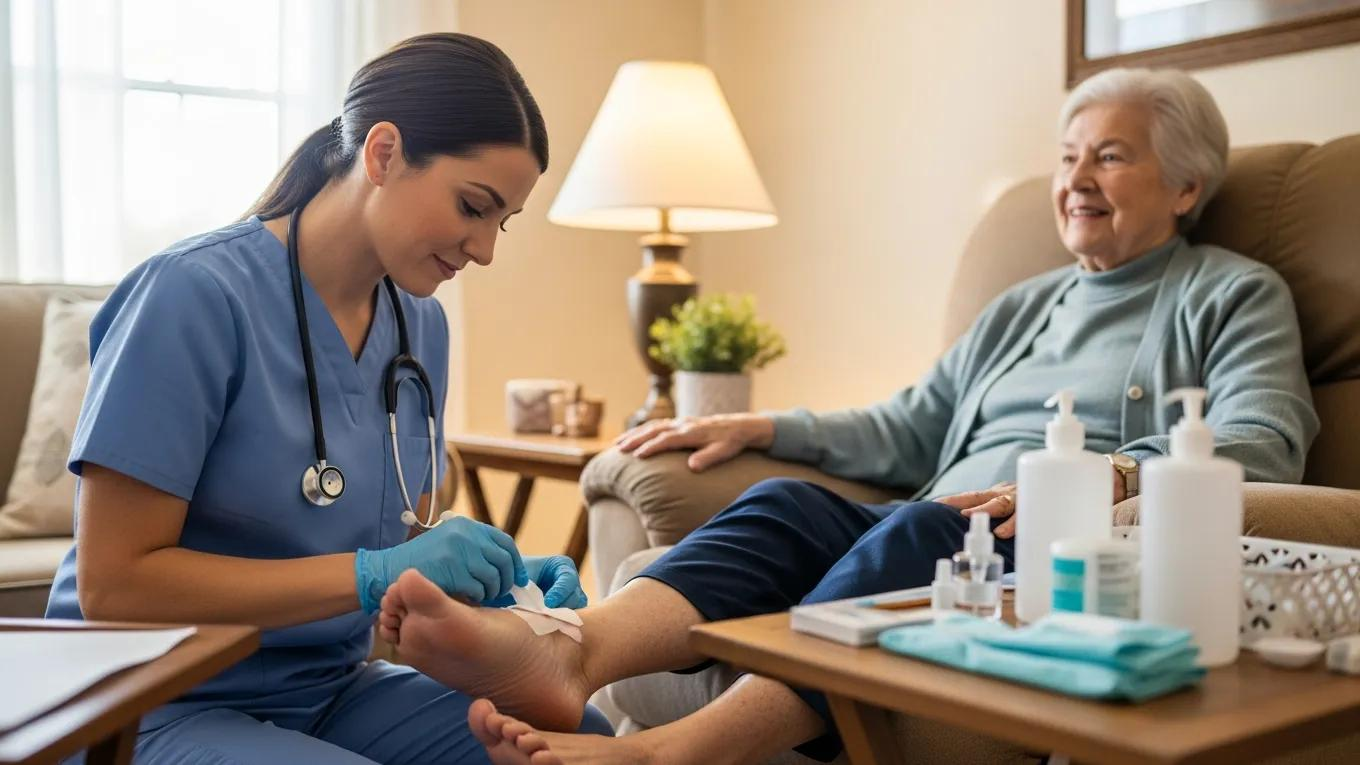
Wound Care at Home in Miami: Skilled Nursing for Post-Surgical & Chronic Wounds
Skilled Home Health Care for Acute & Postacute Needs
skilled home health care has undergone important changes since 1965. Initially designed to cover acute and postacute care
Home care, 1965
Importance of Professional Wound Care
Types of Wounds Treated by Home Health Nurses in Miami
- Post-Surgical Wounds: These wounds require careful monitoring and management to prevent infection and promote healing. Skilled nurses assess the wound site, change dressings, and provide education on care techniques. According to the CDC, surgical site infections (SSIs) occur in approximately 2–5% of patients undergoing inpatient surgery and are among the most common healthcare-associated infections. The CDC recommends daily wound inspection, sterile dressing technique, and monitoring for classic signs of infection such as erythema, warmth, purulent drainage, fever above 101°F, and increased pain, all of which skilled nursing wound care in Miami diligently addresses.
- Chronic Wounds: Chronic wounds, such as diabetic ulcers, require ongoing treatment and specialized care. Nurses develop individualized care plans that include regular assessments and adjustments based on the wound's condition. The American Heart Association (AHA) notes that peripheral artery disease (PAD) affects approximately 8.5 million Americans over age 40 and is a leading cause of non-healing lower extremity wounds. Patients with PAD combined with diabetes have a 15–40 times higher risk of lower extremity amputation, underscoring the urgency of skilled nursing wound care at home in Miami-Dade.
- Diabetic Ulcers: These wounds are common among individuals with diabetes and can lead to serious complications if not treated properly. Skilled nursing care focuses on infection prevention, wound cleaning, and patient education on managing diabetes. The Agency for Healthcare Research and Quality (AHRQ) reports that 15% of people with diabetes will develop a foot ulcer during their lifetime, and 85% of diabetes-related lower extremity amputations are preceded by a foot ulcer. Ameri-Care provides specialized diabetic ulcer care in Miami, including offloading education, glycemic monitoring coordination, and daily wound assessment to improve healing outcomes.
Post-Surgical Wounds
Chronic Wounds
Home Care Nurses Managing Chronic Wounds
home care nurses' experiences in managing chronic wounds, focusing on the obstacles they face and ideas for improving treatment of chronic wound treatment in home care
Home Care Nurses´ Experiences with Managing Chronic Wound, 2024
The Role of a Skilled Nurse in Home Wound Care
- Wound Assessment: Nurses evaluate the wound's size, depth, and condition to determine the appropriate treatment plan. Ameri-Care nurses follow the WOCN Society clinical practice guidelines, which are the gold standard for wound assessment and management in home health settings. WOCN-certified nurses (WOCNs/CWOCNs) represent the highest credential in wound care nursing.
- Patient Education: They educate patients and caregivers on proper wound care techniques, signs of infection, and when to seek further medical attention.
- Coordination with Healthcare Providers: Skilled nurses communicate with physicians and other healthcare professionals to ensure a cohesive approach to patient care.
Dressing Changes, Debridement Coordination & Infection Monitoring
Improving In-Home Chronic Wound Management
the home health industry needs to improve wound management methods and technologies to properly care for patients with chronic wounds.
In-home wound care management utilizing information technology, 2007
Documentation, Physician Communication & Care Plan Updates
V.A.C. Therapy at Home
The Four Stages of Wound Healing: What to Expect
- Hemostasis: The body initiates a clotting process to stop bleeding.
- Inflammation: The area becomes red and swollen as the body fights infection.
- Proliferation: New tissue forms, and the wound begins to close.
- Remodeling: The wound matures and strengthens over time.
Coordinating Care With Miami Wound Care Centers & Hospitals
When to Call a Wound Care Nurse: Warning Signs Checklist
- Increased Pain: If the pain around the wound worsens, it may signal an infection or complication.
- Signs of Infection: Redness, swelling, or discharge from the wound are indicators that professional care is needed.
- Delayed Healing: If the wound does not show signs of improvement within a reasonable timeframe, it is crucial to consult a skilled nurse.
Medicare & Medicaid Coverage for Home Wound Care in Florida
Frequently Asked Questions About Home Wound Care in Miami
- What types of wounds can be treated at home? - Skilled nurses can manage post-surgical wounds, chronic wounds, and diabetic ulcers in the home setting.
- How often will a nurse visit for wound care? - The frequency of visits depends on the patient's needs and the complexity of the wound.
- Is home wound care covered by insurance? - Many insurance plans, including Medicare and Medicaid, cover home wound care services.
The PUSH Tool — Measuring Wound Healing Progress at Every Visit
- Wound Surface Area (length × width in cm²): Scored 0–10 based on size. A decreasing score indicates healing; an increasing score signals deterioration or infection.
- Exudate Amount: Scored 0 (none) to 3 (heavy). Heavy exudate may indicate infection or biofilm formation.
- Tissue Type: Scored 0 (closed/healed) to 4 (necrotic tissue). Presence of necrotic tissue (eschar/slough) indicates the wound requires debridement before healing can progress.
Wound Bed Preparation — The TIME Framework
T — Tissue Management (Non-viable or Deficient Tissue)
- Autolytic Debridement: The body's own enzymes liquefy necrotic tissue under a moisture-retentive dressing (hydrocolloid, hydrogel). Slowest method — appropriate for patients who cannot tolerate other methods. Takes 3–7 days.
- Enzymatic Debridement: Topical agents (collagenase/Santyl) chemically dissolve necrotic tissue. Requires a physician prescription. Effective for wounds with thick eschar. Takes 5–14 days.
- Sharp/Mechanical Debridement: Removal of necrotic tissue using sterile instruments (scissors, forceps, curette) by a skilled nurse or wound care specialist. Fastest method — immediately reduces bacterial burden and stimulates healing. Requires physician order and appropriate nurse competency.
I — Infection and Inflammation Control
M — Moisture Balance
- Low exudate: hydrogel, hydrocolloid
- Moderate exudate: foam dressings, alginate
- Heavy exudate: super-absorbent dressings, NPWT (see below)
E — Edge of Wound (Epithelial Advancement)
Advanced Wound Modalities — NPWT and Beyond
Negative Pressure Wound Therapy (NPWT / V.A.C. Therapy)
- Foam dressing changes every 48–72 hours (or per physician order)
- Monitoring for canister fill, seal integrity, and pressure alarms
- Assessing wound response: granulation tissue formation, wound contraction, exudate reduction
- Dehisced surgical wounds
- Diabetic foot ulcers (DFUs) — reduces amputation risk when combined with offloading
- Stage III–IV pressure injuries
- Traumatic wounds and skin graft preparation